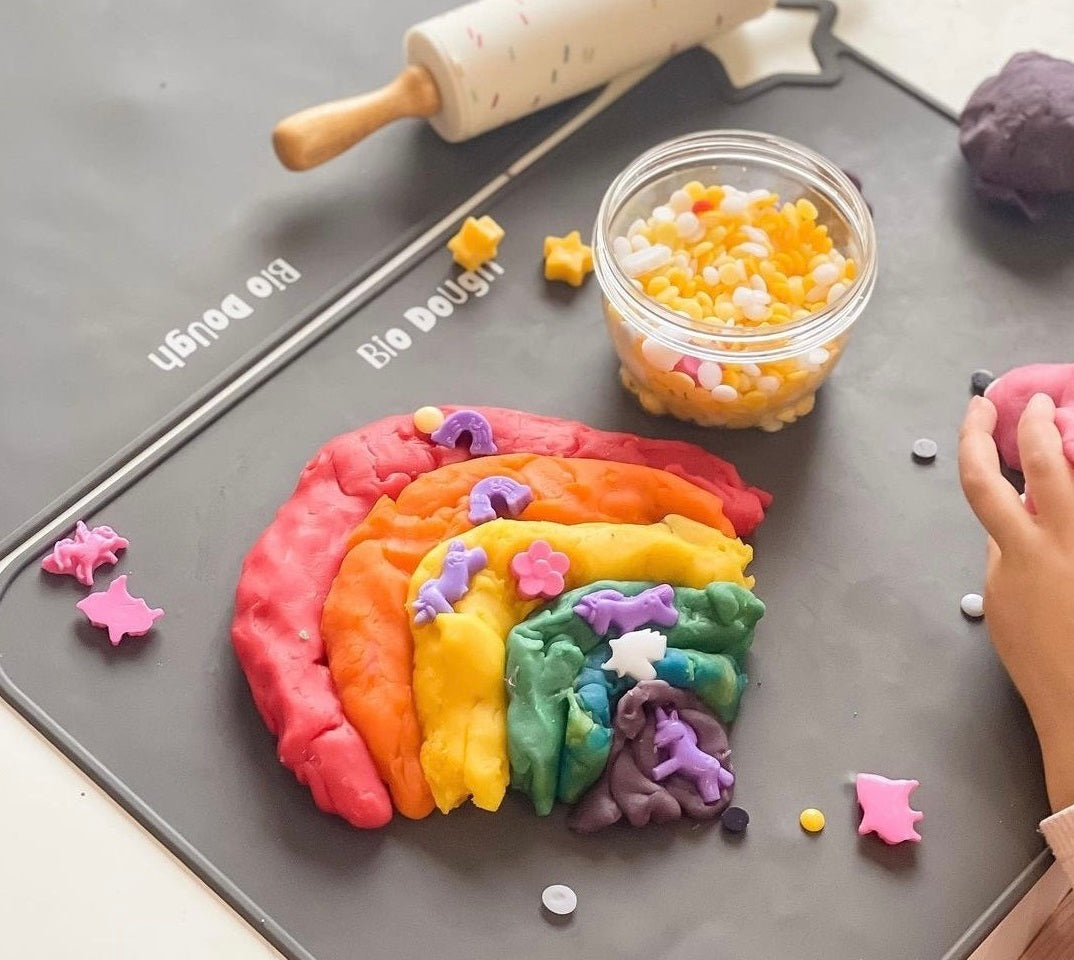
Rainbow playdough ideas can be as simple as lining up six colourful snakes or as elaborate as building a unicorn world with clouds, stars and a story. The best setup gives children a clear invitation, then lets them change the colours, characters and rules.
This guide includes twelve practical activities for children aged roughly two to six. Bio DoUgh is recommended for ages two and over, but glitter, sprinkles and figurines can have separate age guidance. Keep small accessories away from children under three and anyone who mouths objects.
Choose a Magical Play Idea
| Idea | Approximate stage | Extra materials | Main play focus |
|---|---|---|---|
| 1. Roll a rainbow | 2+ | None | Colour order and two-hand rolling |
| 2. Rainbow colour bridge | 3+ | Two colours at a time | Predicting colour mixing |
| 3. Cloud and raindrops | 2+ | Large roller optional | Pressing and storytelling |
| 4. Unicorn face | 3+ | Large age-safe cutter optional | Shape building |
| 5. Twist a unicorn horn | 3+ | None | Two-hand coordination |
| 6. Starry night print | 3+ | Large star stamp | Pattern making |
| 7. Rainbow road | 2+ with age-safe vehicle | Clean toy vehicle | Tracks and pretend play |
| 8. Glitter constellation | 3+ with supervised glitter | Bio DoUgh glitter | Controlled sprinkling |
| 9. Unicorn rescue story | 3+ | 3+ figurine if suitable | Problem solving and language |
| 10. Magic potion colour chart | 4+ | Paper and pencil | Prediction and recording |
| 11. Rainbow bakery | 3+ | Large cutters | Counting and role play |
| 12. Build a magical world | 4+ group | Age-safe theme pieces | Collaboration |
Plan the Colours Before Play
A full rainbow is visually exciting, but too many large pieces mixed together quickly become one blended colour. Colour change is a valid part of exploration, so decide whether today is a mixing session or a keep-the-rainbow session.
| Goal | Setup |
|---|---|
| Keep colours distinct | Offer narrow strips, a separate place for each tub and a small "mixing piece" from each colour. |
| Explore a new colour | Offer only two small portions and predict the result before mixing. |
| Make pastel unicorn colours | Choose pink, purple, blue and white, then keep white portions small because they change quickly. |
| Avoid an accidental muddy blend | Use Bio DoUgh's colour groups and return clean, unmixed pieces to separate containers. |
| Let the child experiment freely | Protect the main tubs by offering small portions and accept the finished blend as part of the activity. |
The Bio DoUgh FAQ groups colours that are more likely to mix pleasingly. The guide suggests warm colours together, cool pink-purple-blue colours together, or yellow-green-blue colours together, with white and black used carefully.
Twelve Glitter, Rainbow and Unicorn Activities
1. Roll a playdough rainbow
Roll six short ropes and curve them into arches. A younger child can make three large bands instead of a full colour sequence.
Invitation: "Which colour should be on top?" Extend it: Make two rainbows with different colour orders. Safety: Use dough only for a two-year-old. Keep pieces large and supervise.
2. Build a rainbow colour bridge
Place a small yellow piece at one end of the mat and a small blue piece at the other. Roll each towards the centre, join them and predict what the meeting colour will become. Repeat with other pairs.
Invitation: "What do you think will happen in the middle?" Extend it: Use unequal portions and compare the results. Keep: Photograph the stages instead of trying to separate the mixed dough.
3. Make clouds and raindrops
Flatten white or pale dough into a cloud. Roll blue drops or poke a rain pattern underneath. The child can decide whether the weather becomes sunny, stormy or snowy.
Invitation: "What is happening in this sky?" Extend it: Add a rainbow after the rain. Adapt it: Use one-finger pokes if rolling small drops is difficult.
4. Make a unicorn face
Flatten a large oval, add two ears and place a thick horn at the top. Eyes and a mouth can be pressed in with a large tool instead of adding tiny loose pieces.
Invitation: "What expression does your unicorn have?" Extend it: Add a mane made from thick colourful ropes. Safety: Dough marks are a safer choice than beads or sequins for younger children.
5. Twist a unicorn horn
Roll two ropes, place them side by side and twist them gently together. Taper one end and attach the broad end to a flat base so the horn stands more securely.
Invitation: "How can we stop the horn from falling?" Extend it: Compare a short thick horn with a tall thin one. Learning moment: The child can change the base, pressure or rope thickness after a collapse.
6. Stamp a starry night
Flatten dark blue or purple dough and press a large star stamp repeatedly. Add a crescent moon made from a curved dough rope.
Invitation: "Are your stars in a pattern or scattered?" Extend it: Invent a constellation and tell its story. Adapt it: Use a large block edge to make simple star-like crossing lines.
7. Create a rainbow road
Line up colourful strips to make a road for a clean, age-appropriate vehicle. Add a cloud garage, bridge or rainbow tunnel.
Invitation: "Where does this road go?" Extend it: Compare the wheel tracks on thick and thin dough. Safety: Inspect the vehicle for loose wheels or small parts.
8. Make a glitter constellation
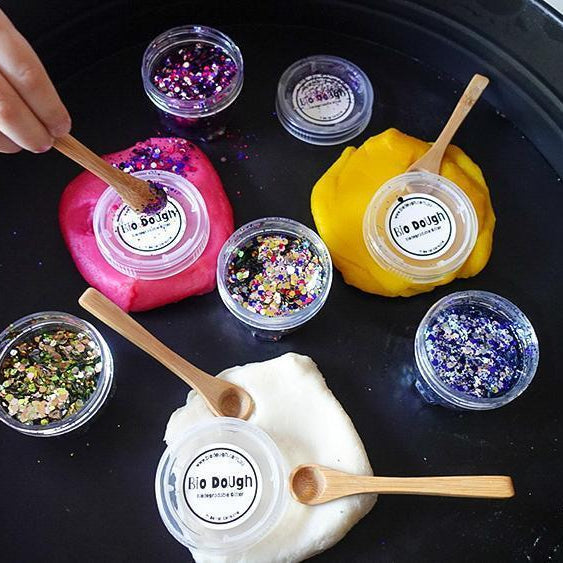
An adult places a very small amount of labelled Bio DoUgh glitter in a shallow dish. The child uses the supplied spoon, if age-appropriate, to add controlled dots to a flattened night sky. Press gently so the glitter stays with the dough.
Invitation: "Can you make a line of three sparkling stars?" Extend it: Draw the same constellation on paper. Safety: Avoid eyes, faces, inhalation and mouthing. End the activity if glitter begins to scatter beyond the mat.
9. Tell a unicorn rescue story
Build a blocked path, wobbly bridge or lost rainbow. A child aged three or over can add the Bio DoUgh Rainbow Unicorns figurines only when the current 3+ warning and the child's readiness are satisfied.
Invitation: "What problem does the unicorn need to solve?" Extend it: Try two different solutions. Younger adaptation: Make a large dough unicorn instead of using a figurine.
10. Run a magic potion colour chart
Choose three small colour pairs. Before mixing, draw or point to the predicted result. Mix, compare and place the new colours in a row.
Invitation: "Which prediction was closest?" Extend it: Add more of one starting colour and observe the difference. Note: This is pretend potion play. Keep real drinks and food out of the activity area.
11. Open a rainbow bakery
Use large cutters or hands to create colourful pretend cakes, biscuits and fruit. Count the pieces, take orders and build patterns on a tray.
Invitation: "What colours will the customer choose?" Extend it: Make a menu with drawings and whole-number prices. Safety: Playdough is not food, even when it resembles a treat.
12. Build a magical world together
Give each player a role: clouds, rainbow paths, characters, stars or homes. Combine the pieces and tell one shared story.
Invitation: "How will all our ideas connect?" Extend it: Photograph the beginning, middle and end. Collaboration rule: Ask before moving another person's creation.
How to Use Glitter More Responsibly
Not all glitter is the same. Claims such as biodegradable, compostable or plastic-free apply to the specific product and certification, not to glitter as a whole.
Bio DoUgh states that its glitter is made from plant-based eucalyptus cellulose and is biodegradable, and that it meets OECD 301B testing. Check the exact live product page and packaging before repeating the claim in marketing or making a purchase.
Use glitter in a controlled way:
- Cover the table with a large washable mat or tray.
- Keep the main container with the adult and pour out only a tiny amount.
- Use the supplied spoon or another age-appropriate scoop.
- Sprinkle close to the dough, not from height.
- Press the glitter gently into the surface rather than blowing or brushing it.
- Keep hands away from eyes and mouths.
- Collect spills with a damp cloth or manufacturer-approved method.
- Wash and dry hands after play.
"Non-toxic" still does not mean edible. Loose glitter should never be treated as food, face paint or body glitter unless the product is specifically labelled for that use.
Age Guidance for a Magical Setup
| Child's stage | A suitable invitation | Leave out |
|---|---|---|
| Under 2 | Do not offer Bio DoUgh. Choose an infant-appropriate sensory activity. | Dough, glitter, sprinkles, figurines and loose tools |
| Age 2+ and ready | Dough-only rainbow, clouds, tracks and large hand-made unicorn shapes | Loose glitter, small parts and 3+ accessories |
| Age 3+ and ready | Large cutters, controlled glitter and 3+ accessories whose labels permit use | Any damaged, loose or unlabelled pieces |
| Child who mouths objects | Dough-only under direct supervision, or wait | Glitter, sprinkles, figurines and small dough pieces |
| Mixed-age group | Set up for the youngest child or use physically separate sessions | Older-child accessories within reach of younger siblings |
The ACCC advises choosing age-appropriate toys and keeping small objects away from children under three. Use its kids' toys and choke-check guidance when selecting theme pieces.
A Low-Mess Magical Play Setup
- Use one silicone play mat or a large rimmed tray.
- Set out only the colours needed for the chosen idea.
- Keep unused tubs closed and away from the mixing area.
- Put glitter in one shallow container with one scoop.
- Tie back long hair and roll up sleeves.
- Keep pets, food and younger siblings away.
- Collect large dough pieces first, then wipe glitter with a damp cloth.
- Return only clean dough to airtight containers and discard contaminated pieces.
Bio DoUgh's free printables include unicorn, fairy and rainbow designs, which can add a theme without introducing loose decorations.
Why Choose Bio DoUgh for Rainbow and Unicorn Play?
Bio DoUgh is Australian made with 100% food-grade ingredients sourced from certified Australian suppliers. It is soft, highly malleable and available in colours that can be rolled, layered, pressed and blended. Clean Bio DoUgh can be refreshed with a few drops of water if it begins to dry, according to current care instructions.
Bio DoUgh is recommended for ages two and over, contains wheat and is not edible. The brand's glitter, sprinkles and figurines are separate products with their own guidance. Some themed accessories are 3+ because of small parts.
Colour is central to many ideas in this guide, but Bio DoUgh also offers Scent-Free and Dye-Free Bio DoUgh. Families can use its neutral, soft base with a play mat, large cutters or printables when they want the theme without added fragrance or artificial dye. This is a separate product choice and the usual age, allergen and supervision guidance still applies.
The Bio DoUgh Mega Value Bundle currently includes multiple scented doughs, tools, containers and glitter sets, making it a convenient base for many ideas in this guide. Contents, price and warnings can change, so check the product page and each included item's age label.
For a specific 3+ theme, see the Bio DoUgh Rainbow Unicorns figurines. Use the dough-only alternatives in this article for younger children.
Frequently Asked Questions
How do you make a playdough rainbow?
Roll several short ropes, line them up and curve them into arches. Use three thick colours for a younger child or six narrower bands for an older child. Press the bands together lightly so the colours remain visible.
How do you make a playdough unicorn?
Start with a large oval face, add two ears and twist two dough ropes into a horn. Make the eyes and mouth as pressed marks for younger children. Older children can add a mane, body and story scene.
What glitter should I use with playdough?
Use a product clearly labelled for the activity and follow its age, handling and clean-up guidance. Bio DoUgh states that its glitter uses plant-based eucalyptus cellulose and meets OECD 301B testing. Verify the exact page and package before use.
Is biodegradable glitter safe to eat?
No. Biodegradable describes environmental breakdown under specified conditions, not edibility. Keep glitter away from mouths and food.
Can a two-year-old use glitter playdough?
Bio DoUgh dough is recommended 2+, but loose glitter and glitter tools require a separate readiness and label check. A dough-only rainbow or cloud activity is the simpler choice for a two-year-old.
How do I keep rainbow colours from becoming brown?
Use small mixing portions and keep the main colours separate. Choose compatible colour groups, or decide that mixing is the goal of the session. Store clean unmixed pieces in separate airtight containers.
Are unicorn figurines safe for toddlers?
The Bio DoUgh Rainbow Unicorns figurines page states 3+ and includes a choking warning. Do not use them with children under three. For a younger child, make one large unicorn entirely from dough.
How do I remove spilled glitter?
First collect all dough. Use a damp cloth for loose glitter on a hard surface or follow the surface manufacturer's care directions. Avoid blowing or sweeping glitter into the air.
The Bottom Line
Rainbow and unicorn play works best when the setup is colourful but controlled. Offer a few colours, one clear invitation and only accessories that suit the child's age and mouthing behaviour. Use small mixing portions, keep glitter close to the mat and let the story matter more than a perfect finished model.
For a ready-made colour and tool collection, explore the Bio DoUgh Mega Value Bundle. Check current contents, wheat information and each item's age guidance.
Sources and Fact-Checking Notes
- Bio DoUgh FAQ: age, ingredients, wheat, colour groups, storage, rehydration and glitter composition claims.
- Bio DoUgh Scent-Free and Dye-Free dough: current product-specific fragrance, dye and texture information.
- Bio DoUgh Marine Mix Glitter: current plant-based eucalyptus cellulose, biodegradable and OECD 301B product claims. Recheck before publishing.
- Bio DoUgh Rainbow Unicorns figurines: current 3+ and choking-warning information.
- Bio DoUgh free printables: unicorn, fairy and rainbow printable categories.
- ACCC kids' toys guide: age labels, small-parts risks and choke-check guidance.
- Raising Children Network playdough activities: child-led play, common actions, tools and age adaptation.
- NHMRC healthy environment guidance: handwashing, airtight storage and disposal of mouthed or contaminated playdough.
This article offers general play ideas. Product compositions and warnings can change, so use the current label and live Bio DoUgh page at the time of play.