Mix 1 cup plain flour, 2 tablespoons cream of tartar and 2 tablespoons oil in one bowl. In a second bowl, dissolve half a cup of salt and a few drops of food colouring in 190 ml boiling water. Combine both bowls, let it cool slightly, then knead into a soft ball. The boiling-water step is for adults only. Store the finished dough in an airtight container and treat it as a toy, not food. If you would rather have playdough ready to use, explore our Australian-made playdough.
There is something truly special about playdough time. Messy little hands, big imaginations, and that quiet moment where the kids are fully absorbed and you might even finish your coffee while it is still warm.
At Bio DoUgh, our playdough began as a homemade family recipe and was refined through a year of study, research and testing. We now make it in-house in Australia with food-grade ingredients.
But hey, we are parents too. And sometimes you just want to whip something up at home, especially if you are waiting on an order, live far away, or just want a fun afternoon activity with the kids.
So today we are sharing a simple homemade playdough recipe. It is quick to prepare and uses ingredients found in many pantries.
Why Make Playdough at Home?
Making playdough at home is:
-
A hands-on activity for children who are old enough to follow the recipe's guidance
-
A chance to practise rolling, shaping and creating together
-
An easy, screen-free activity that keeps little ones busy
-
Perfect for rainy days, school holidays or last-minute fun
-
A lovely way for kids to help measure, mix and learn in the kitchen
And while homemade playdough will not fully replace professional playdough (more on that below), it is a great option when you need something quick and joyful. Pair it with our free playdough printables for even more play ideas.
What You Need to Make Playdough (Pantry Staples Only)
|
Prep time |
Ingredients |
Makes Cooking |
Cooking |
|
10 minutes |
Available in most kitchens |
No stove needed |
1 ball of dough (repeat per colour) |
Ingredients
|
Bowl |
Ingredient |
Amount |
Notes |
|
Bowl 1 |
Plain Flour |
1 Cup |
Plain wheat flour works best in this no-cook recipe |
|
Bowl 1 |
Cream of Tartar |
2 Tablespoons |
Baking aisle at Coles or Woolworths, next to the cake flour |
|
Bowl 1 |
Oil |
2 Tablespoons |
Vegetable, sunflower or coconut oil |
|
Bowl 2 |
Salt |
1/2 cup |
Plain table salt is fine |
|
Bowl 2 |
Food colouring |
A few drops |
Gel colouring gives brighter colours |
|
Bowl 2 |
Boiling water |
190 ml (or 190 g) |
Adults only, burn hazard |
How to Make Playdough: Step-by-Step Method (No Stove Needed)
Step 1: Mix the Dry Ingredients
In Bowl 1, mix together the flour, cream of tartar and oil. Give it a good stir until everything is well combined, then set it aside.
Step 2: Prepare the Salt Mixture
In Bowl 2, add the salt and a few drops of food colouring. Carefully pour 190 ml of boiling water over the salt and colour. This step is for adults only as boiling water is a burn hazard. Stir well for about 30 seconds until the salt completely dissolves and the colour is evenly mixed.
Step 3: Bring It All Together
Pour Bowl 2 into Bowl 1 and mix with a spoon. Once it cools enough to touch, use your hands to knead the dough until it forms a smooth, soft ball. Kneading is the most important step, so do not rush it. And just like that, your homemade playdough is ready.
Want Rainbow Playdough?
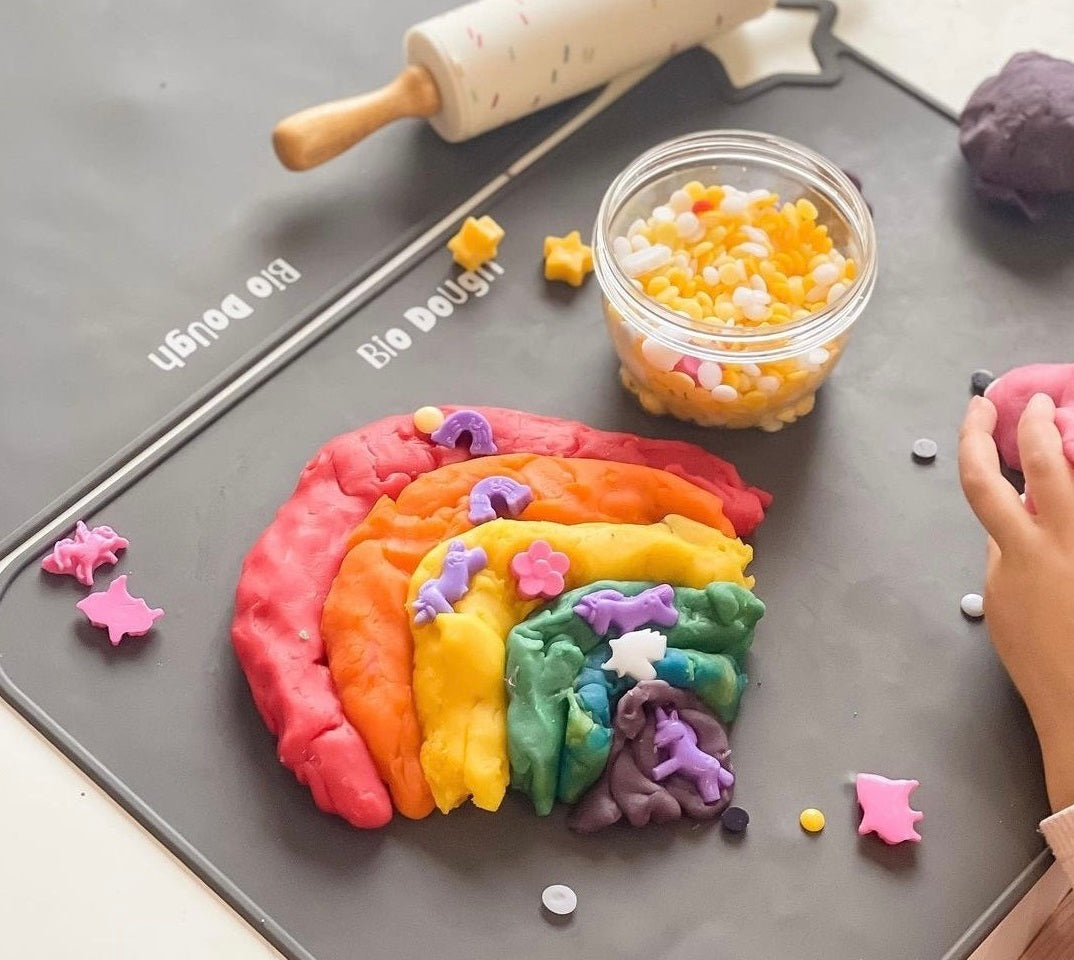
Simply repeat the recipe with a different food colouring each time. Kids love lining up all the colours, just like our rainbow playdough bundles.
Troubleshooting: Playdough Too Sticky, Dry or Crumbly?
|
Problem |
Fix |
|
Too sticky |
Add extra flour, one teaspoon at a time, and keep kneading |
|
Too dry or crumbly |
Add a tiny bit of oil or a few drops of warm water |
|
Gone hard |
Knead in a few drops of warm water to make playdough soft again. Bio DoUgh is fully rehydratable, so a splash of water brings it right back to life |
|
Colour staining hands |
Use gel food colouring instead of liquid and knead the colour in fully before play |
How Long Does Homemade Playdough Last?
Stored in an airtight container or zip-lock bag in a cool spot, homemade playdough may last for several weeks. Discard it if it becomes slimy, develops an unusual smell or shows mould. For Bio DoUgh, follow the current packaging and our FAQ: unopened dough can last up to two years when stored as directed, and we recommend disposing of opened dough after three months to reduce cross-contamination.
Fun Playdough Variations to Try
|
Variation |
How to Make It |
|
Scented playdough |
Add a few drop of favourite essence or a sprinkle of cinnamon. Every colour of Bio DoUgh natural playdough comes with its own unique scent |
|
Glitter playdough |
Once cool, Knead in some biodegradable glitter for sparkle without the microplastics |
|
Textured playdough |
Press in some playdough sprinkles for texture, shapes and decorating fun |
|
Chocolate playdough |
Add half a cup of cocoa powder for a rich brown dough that smells delicious (not for eating) |
|
Gluten free playdough |
Use a cooked stove-top recipe with a gluten free flour blend. This no-cook method does not work with gluten free flour |
Make Playdough Time Even Better
Once your dough is ready, roll it, cut it, stamp it and make up little stories with age-appropriate playdough figurines and playdough tools and accessories. Check each accessory's packaging for its age guidance.
Homemade Playdough vs Bio DoUgh: What Is the Difference?
|
Feature |
Homemade Playdough |
Bio DoUgh |
|
Ingredients |
Pantry staples |
Professional food-grade, made in Australia from Australian ingredients |
|
Texture |
Good, varies batch to batch |
Consistently smooth and soft, made with specialised machinery |
|
Shelf life |
4 to 8 weeks |
Up to 2 years in original packaging; dispose of opened dough after 3 months |
|
Rehydratable |
Partially |
Yes, just add water |
|
Colours and scents |
Your food colouring |
many colours, each with a unique scent |
|
Best for |
Quick, fun for today |
Long-lasting sensory play, gifts, daily use |
These ingredients and processes simply are not common in home kitchens, which is why our dough feels different, lasts longer and is designed specifically for little hands. You can read more about our story on our About Us page.
We are sharing this recipe for those moments when you cannot get to us, you are far away, or you just want a hands-on activity with the kids right now. Because play, creativity and connection matter most.
Why Parents Choose Bio DoUgh
-
100% natural and non-toxic, made in Australia from Australian ingredients
-
many colours, each with its own unique scent for richer sensory play
-
Rehydratable, so one pack lasts and lasts, just add water
-
Soft and malleable for rolling, pressing and shaping during supervised play
-
Made in-house in Australia
What our customers say:
"The kids love how soft and squishy this dough is! Scents are great. Lovely customer service!" - Samantha P
"Best play dough ever. It smelt good, felt good, the colours were great and it never made a mess. I would highly recommend people to buy this product." - Brooke K
"Such a wonderful product that my kids adore and excellent customer service from Bio DoUgh!" - Andrea S
Homemade Playdough FAQs
Is homemade playdough safe for toddlers?
No. This recipe contains wheat and a substantial amount of salt, and the finished dough is a toy rather than food. The boiling-water step is for adults only. Supervise play and keep the dough out of children's mouths.
How do you make playdough soft again?
Knead a few drops of warm water into the dough until it softens. Repeat until it comes back to a smooth ball. Bio DoUgh is designed to be rehydratable this way, even months later.
Can you make gluten free playdough?
Not with this no-cook method. Gluten free flours do not hold together the same way, so a gluten free batch needs to be cooked on the stove to come out soft and workable. If you want a gluten free option for kids with coeliac disease or wheat allergies, use a cooked recipe instead, or reach for a ready-made dough.
Do you need to cook this playdough on the stove?
No. The boiling water does the job, so there is no stove-top cooking needed. Just remember the boiling water step is strictly for adults.
How should I store homemade playdough?
Pop it in an airtight container or zip-lock bag and keep it in a cool, dry spot. There is no need to refrigerate it.
Final Thoughts
Whether you are making playdough at home or using Bio DoUgh, the magic is in the moment. Kids exploring, imagining, squishing, rolling and creating.
And if you would like a ready-to-use playdough made in Australia, explore our Bio DoUgh sets.
Happy playing,