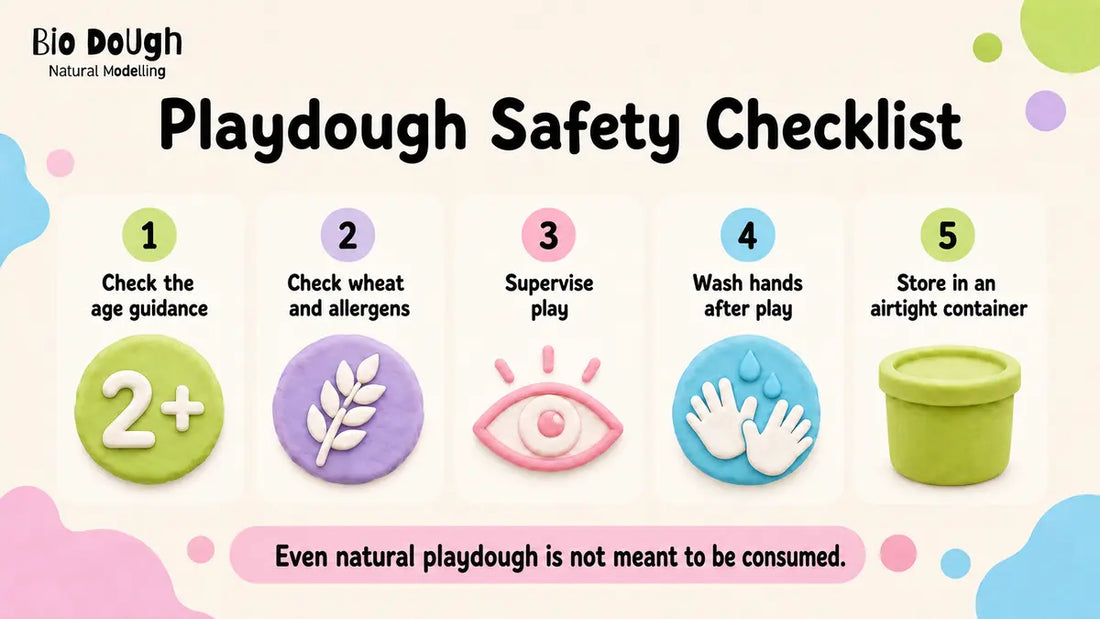
Bio DoUgh is recommended for children aged two and over, so it is not a play material for babies. For toddlers aged two and above, the age on the label is the starting point, not the whole decision. A child should also be able to keep the dough out of their mouth, stay with an adult at the play surface and use only age-appropriate tools.
If your toddler still mouths toys often, wait. Do the same if they cannot yet follow a simple "dough stays on the mat" cue. Try a different supervised play idea instead. Children develop at different rates, so there is no need to rush.
Playdough Age and Readiness Guide
| Child's stage | General guidance | Safer choice |
|---|---|---|
| Baby under 12 months | Babies explore heavily with their mouths and need toys specifically suitable for infancy. | Do not offer Bio DoUgh. Choose a baby-safe sensory activity and supervise it. |
| Young toddler under 2 | Bio DoUgh is not recommended under age two. Mouthing can still be frequent. | Wait. Follow the age label even if the child appears interested. |
| Toddler aged 2+ who still mouths toys | The age minimum is met, but the child might not be ready for this material. | Delay playdough or keep the attempt extremely brief and stop at the first mouthing behaviour. |
| Toddler aged 2+ who follows simple directions | A short, directly supervised session with one piece of dough and no small accessories can be appropriate. | Sit within reach, model pressing and rolling, and pack away after five to ten minutes. |
| Child aged 3+ | More tools and themes can be introduced if their labels allow it. | Continue supervision and check every cutter, figurine, sprinkle or loose part separately. |
Why Playdough Is Not a Baby Activity
Babies learn by grasping, squeezing and bringing objects to their mouths. This is normal development, but it makes modelling dough a poor choice. The ACCC notes that babies and toddlers often mouth toys, which increases their vulnerability to choking and ingestion hazards.
Even when a dough is described as non-toxic or made with food-grade ingredients, it is still a toy. It can be salty, contain allergens and pick up dirt or small pieces from the play surface. "Non-toxic" does not mean edible.
For a baby, choose sensory play designed for their age and stage, such as a textured board, water play or a supervised treasure basket made only with objects too large to swallow. Check all items and follow the relevant safety guidance.
Five Signs Your Toddler May Be Ready
The following signs can help you decide whether to try a first session after the product's minimum age has been reached.
1. They no longer mouth most play objects
An occasional attempt can still happen, so close supervision remains essential. If nearly every object goes straight to the mouth, wait.
2. They can follow one simple direction
A child does not need perfect language. They should respond consistently enough to a short cue such as "on the mat" or "hands down" so you can interrupt unsafe behaviour quickly.
3. They can stay seated or settled beside you briefly
The first session does not need to last long. Five calm minutes can be enough. Do not push for a longer session when a child wants to leave, throw or carry the dough around the room.
4. They can explore with their hands without distress
Some children love soft, resistant textures. Others dislike residue on their hands. Offer a tool, allow one-finger contact or stop and try another day. Do not force messy play.
5. You can supervise from arm's reach
Active supervision means watching the child and being close enough to intervene. It is not the same as checking from across the room while cooking, working or caring for another child.
Signs It Is Better to Wait
Pause or postpone playdough when your child:
- Is younger than the age on the product label
- Regularly puts toys, craft materials or food-sized objects in their mouth
- Bites off and swallows pieces before you can intervene
- Throws or carries play materials away from the supervised area
- Has a known ingredient allergy that has not been checked against the product
- Is unwell, has broken skin on the hands or is too tired to follow simple guidance
- Becomes distressed by the texture, scent or mess
Waiting is not a missed learning opportunity. Play can happen through many safe, age-appropriate materials.
How to Introduce Playdough to a Two-Year-Old
Keep the first experience simple, predictable and short.
1. Prepare one clean play area
Use a stable table or floor mat away from food, pets and younger siblings. A Bio DoUgh silicone play mat can define the play area and simplify clean-up.
2. Offer one piece of dough
One colour and a piece about the size of a small orange are enough. Multiple tubs, cutters and decorations can be overwhelming and create more opportunities for pieces to travel.
3. Model three simple actions
Show "squish", "poke" and "roll". Use short language and copy what your child chooses to do. There is no need to produce a recognisable object.
4. Keep your hands available
Sit beside the child. If the dough moves towards the mouth, calmly block it, say "playdough is for hands" and redirect once. End the session if mouthing continues.
5. Finish while it is still going well
Five to ten minutes is enough for a first attempt. Ask the child to help put the dough into its container, then wash and dry hands.
Easy First Playdough Activities for Toddlers
These activities use the dough itself or one large, age-appropriate tool.
| Activity | What to do | What the child practises |
|---|---|---|
| Finger pokes | Flatten a thick disc and invite the child to make holes with one finger. | Isolated finger movement and cause-and-effect play |
| Palm squish | Press a soft ball flat with one or both palms. | Graded pressure and two-hand participation |
| Big roll | Roll a large ball between both hands or across the mat. | Hand movement and tracking |
| Short snake | Roll a thick rope using both palms. | Coordinated back-and-forward movement |
| Hide and reveal | Cover part of a large cutter or another clearly age-appropriate object, then uncover it together. | Object permanence and problem solving without small loose parts |
| Copy my mark | Adult makes one line or dot; child makes any mark beside it. | Imitation without demanding a perfect result |
Follow your child's lead. If they only squeeze the dough for several minutes, that is still a complete play experience.
Tools, Glitter, Sprinkles and Small Parts
The dough's age guidance does not automatically apply to every accessory. Cutters, figurines, sprinkles, glitter spoons and loose decorative pieces can have different warnings.
For children under three, avoid any object that could be swallowed or become lodged in the throat. The ACCC offers a choke-check tool to help identify small objects. Check tools for cracks, sharp edges and loose parts before every session.
Selected Bio DoUgh sprinkles and figurines carry 3+ small-parts warnings. Read the exact product page and packaging rather than assuming that a 2+ dough makes the full themed setup suitable for a two-year-old.
Wheat, Allergies and Coeliac Disease
Bio DoUgh contains wheat. A confirmed wheat allergy is different from coeliac disease, but both deserve an individual plan rather than a guess.
If your child has a wheat allergy, do not use dough that contains wheat. For coeliac disease or another medical diet need, ask your child's care team for advice. Discuss skin contact, hand-to-mouth habits, shared tools and cleaning.
Do not rely on food-grade or non-toxic wording as an allergen claim. Check the current ingredient information and the child's health plan. For a fuller explanation, read Is Playdough Safe and Non-Toxic?
Hygiene and Storage for Toddler Play
Young children touch their faces, floors and toys often, so a simple hygiene routine matters.
- Wash and dry the child's hands before and after play.
- Use a clean, dry play surface and clean tools.
- Keep food and drinks away from the play area.
- Discard any dough that has been mouthed or mixed with dirt, food, hair or pet debris.
- Do not return contaminated pieces to the main container.
- Store clean Bio DoUgh in an airtight container in a cool, dry place.
- If clean Bio DoUgh dries, follow the current care guidance for adding a few drops of water.
- Check for unexpected smell, texture or visible contamination before the next session.
The NHMRC guidance for education and care settings recommends hand hygiene around playdough and disposing of mouthed or visibly contaminated material.
How Play Changes From Two to Six
Age bands are approximate. Interests, strengths and sensory preferences matter more than producing an age-perfect creation.
| Approximate stage | Playdough focus | Adult role |
|---|---|---|
| 2 years | Squeezing, poking, patting and short rolls | Keep it brief, use no small parts and model one action at a time. |
| 3 years | Larger cutters, simple balls and pretend food | Check every tool label and support turn-taking. |
| 4 years | Characters, tracks, patterns and basic letter shapes | Ask open questions and let the child solve construction problems. |
| 5 to 6 years | Detailed models, stories, counting and collaborative scenes | Provide choices, age-appropriate tools and time for independent ideas. |
The Raising Children Network advises following the child's lead and adapting activities to interests and diverse abilities. Play should feel inviting, not like a test.
Why Choose Bio DoUgh for a First Toddler Session?
Bio DoUgh is Australian made with 100% food-grade ingredients sourced from certified Australian suppliers. Its soft, highly malleable texture is designed to be easy for little hands to press, roll and shape. Clean dough can be rehydrated with a few drops of water if it begins to dry, following the current care guidance.
The product is recommended for ages two and over, contains wheat and is not edible. Those boundaries remain important even though the ingredients are non-toxic.
For a child's first sessions, families can also choose Scent-Free and Dye-Free Bio DoUgh. This specific option has no added fragrance or artificial dye and retains Bio DoUgh's soft, malleable texture. It can reduce added sensory elements, but it does not change the 2+ guidance, supervision needs or requirement to check the current allergen label.
| Bio DoUgh feature | What it means for families |
|---|---|
| Recommended 2+ | Wait until age two at minimum, then check readiness and supervise directly. |
| Soft texture | A child can begin with simple pressing and poking rather than hard squeezing. |
| Australian made | The brand states that it is made in Australia using ingredients from certified Australian suppliers. |
| Food-grade ingredients | This describes ingredient quality, not permission to eat the finished toy. |
| Rehydratable | A few drops of water can refresh clean dry dough. Discard contaminated dough. |
| Wheat-containing | Families managing wheat allergy or coeliac disease need an appropriate alternative or clinical guidance. |
The Bio DoUgh Mega Value Bundle is designed for families who want multiple colours, containers and tools. For a newly ready two-year-old, introduce the plain dough first and add only accessories that are clearly suitable for the child's age. Check the current contents and each item's warning before use.
Frequently Asked Questions
Can a baby play with playdough under supervision?
Bio DoUgh is not recommended for children under two. Supervision does not replace a product's age guidance. Babies also explore heavily by mouth, so choose a toy or sensory experience designed for infancy.
Can an 18-month-old use homemade playdough?
Do not assume homemade means safer. Ordinary flour can be raw, salt can be harmful in quantity and the dough can be swallowed. Follow the product or recipe guidance and choose an activity designed for your child's age.
Is playdough suitable for a two-year-old?
It can be, when the product is labelled 2+, the child is no longer regularly mouthing toys and an adult can supervise from arm's reach. Start with one piece of dough, no small accessories and a five-to-ten-minute session.
What should I do if my toddler puts playdough in their mouth?
Remove the dough, wipe or rinse the mouth, end the session and discard that piece. If a concerning amount was swallowed, symptoms develop or you are unsure, call the Poisons Information Centre in Australia on 13 11 26. Call Triple Zero on 000 for an emergency.
Does non-toxic mean my toddler can eat it?
No. Non-toxic does not mean edible. Playdough can be salty, contain wheat and pick up contamination. Teach "playdough is for hands" and supervise every session.
Can my two-year-old use cutters and figurines?
Only when each item is age-appropriate, intact and too large to be swallowed. Some Bio DoUgh figurines and sprinkles are labelled 3+ because they contain small parts, so check the exact packaging and product page.
What if my child hates touching playdough?
Do not force it. Offer a large roller or cutter, let the child watch you, place the dough inside a sealed bag for visual pressing, or choose another play material. Sensory preferences vary.
How can playdough support fine-motor practice?
Pressing, squeezing, pinching and rolling give children varied hand movements to practise. These activities can support play-based practice, but they do not guarantee a developmental outcome or replace advice from a health professional.
The Bottom Line
Babies should not use Bio DoUgh. For toddlers, age two is the minimum, and readiness still matters. A child may be ready when they mostly keep objects out of their mouth. They should also follow one simple cue and stay beside an adult during play.
Start with one soft piece, a clean mat and five simple minutes. Add tools and themed accessories slowly, checking each item's own warning. When your child is ready for more colours and age-appropriate tools, explore the Bio DoUgh Mega Value Bundle.
This article offers general information. Follow the product label and seek personalised advice from your GP, child and family health nurse, paediatrician, occupational therapist or allergy team when needed.
Sources and Fact-Checking Notes
- Bio DoUgh FAQ: current age, ingredient, wheat, storage and rehydration guidance.
- Bio DoUgh Scent-Free and Dye-Free dough: current product-specific fragrance, dye and texture information.
- ACCC kids' toys guide: age labels, mouthing behaviour, small-parts risks and the choke-check tool.
- ACCC play safely with baby: age-appropriate toys, supervision and baby-toy checks.
- Raising Children Network playdough activities: play actions, tool ideas and adaptation for different ages and abilities.
- Pregnancy, Birth and Baby toddler motor skills: fine-motor development and rolling playdough as one example of practice.
- NHMRC healthy environment guidance: handwashing, airtight storage and contaminated-dough disposal.