Wondering how to get playdough out of carpet, hair or clothes? Start by staying calm and removing as much solid dough as possible without rubbing it further in. For carpet and most fabrics, letting the remaining dough dry before gently loosening and vacuuming or brushing it away is usually the safest first move. For hair, use a child-appropriate conditioner to add slip, then work slowly with your fingers and a wide-tooth comb.
The right method depends on the surface. Always check the carpet manufacturer's instructions or the garment care label before adding water or a cleaning product. Test any permitted cleaner in a hidden spot first. These steps can improve your chance of removal, but no general method can promise that every dye mark will disappear from every material.
The Fast Playdough Clean-up Guide
| Where is the playdough? | Best first move | Avoid |
|---|---|---|
| Carpet or rug | Keep people off the area, let the dough dry, gently loosen the solids and vacuum with a hose or nozzle. | Rubbing, hot water, soaking the carpet or reaching first for a strong solvent. |
| Washable clothes | Let the bulk dry, lift it with a spoon or blunt edge, rinse from the back with cold water, pretreat and wash as the care label directs. | Scrubbing soft dough deeper into the weave or machine-drying before the mark is gone. |
| Wool, silk or dry-clean-only clothing | Lift loose solids without pulling fibres, then follow the care label or contact a professional cleaner. | Generic stain-removal recipes, bleach or an unapproved spot cleaner. |
| Hair | Pick away loose pieces, coat the affected section with child-appropriate conditioner, finger-detangle and comb gently from the ends. | Pulling, cutting immediately, hot water or household cleaning chemicals. |
| Upholstery | Remove loose material, identify the manufacturer's cleaning instructions and use only an approved method. | Guessing based on carpet advice or over-wetting cushions. |
Before You Start: Soft Dough and Dried Dough Need Different Handling
Fresh playdough is easy to smear. If a soft lump is sitting on carpet or fabric, lift the bulk straight up with a spoon or a larger piece of clean dough. Do not press down or sweep it across the fibres. If you use dough to pick up smaller crumbs, keep that piece separate and discard it rather than returning it to the container.
Once only a thin layer or embedded crumbs remain on carpet or clothing, allow them to dry where the material's care instructions permit. Dry playdough is more likely to crumble so it can be lifted or vacuumed away. Put an upside-down laundry basket or clean box over a carpet spot while it dries so nobody steps on it.
Have these simple supplies ready:
- A spoon, plastic card or other blunt edge
- A vacuum with a hose or narrow nozzle
- Clean white cloths or plain white paper towel
- Mild laundry detergent or a surface-approved cleaner
- A wide-tooth comb and child-appropriate hair conditioner
- The carpet care instructions or garment label
How to Get Playdough Out of Carpet
The safest general sequence is dry, loosen, vacuum, then assess the remaining mark. This reduces the chance of turning a small lump into a wide, damp paste.
1. Lift the soft bulk without rubbing
Use a spoon or blunt edge to lift any thick, soft pieces straight up. Work from the outer edge towards the centre so the affected area does not spread. Do not push the dough deeper into the pile.
2. Let the residue dry completely
Leave the spot undisturbed until the remaining dough is hard and crumbly. Keep children and pets away while you wait. Do not add water to speed up removal. Hot water can soften and spread the dough, while too much moisture may affect the carpet backing or underlay.
3. Gently loosen the dried pieces
Use the edge of a spoon, a plastic card or your fingers to break up the dry material. Be patient and work in small sections. Some dough guides suggest a stiff brush. However, the Carpet and Rug Institute warns that scrubbing and brush bristles can fray carpet or change its texture. Use a brush only if the carpet maker allows it, and press lightly.
4. Vacuum the crumbs
Use the vacuum hose or narrow nozzle to lift the loosened pieces. Avoid running a heavy vacuum head over a hard lump because it may press residue further into the pile. Alternate gentle loosening and vacuuming until no more dry material comes away.
If you have loop-pile, long-pile, cut-loop or Berber carpet, use suction only. Australian carpet maker Godfrey Hirst advises against powerheads, beater bars and rotating brushes on these constructions because they can cause excessive fuzzing.
5. Treat a remaining colour mark only if needed
After the solids are gone, check the carpet's care and warranty instructions. If the manufacturer permits water-based spot cleaning, test the approved cleaner in a hidden area. Apply a small amount to a clean white cloth rather than pouring it onto the carpet. Blot from the outer edge towards the centre, then remove residue as the product directs.
Use cold water if a rinse is permitted, and blot dry with a fresh white cloth. The Carpet and Rug Institute recommends pretesting spot removers, working gently and avoiding rubbing.
Do not combine cleaners. Avoid vinegar, rubbing alcohol, peroxide, acetone, WD-40 and other solvents. Use one only if the carpet maker or a qualified cleaner approves it for that exact fibre and backing. A product that lifts colour may also lift the carpet dye or harm its finish.
6. Let the area dry and inspect it
Keep the area clear until it is fully dry. If a mark remains, repeat only the manufacturer-approved treatment. Contact a professional carpet cleaner if the carpet is wool, handmade, antique or colour-unstable, if the spill is large, or if the care instructions are unclear.
How to Get Playdough Out of Clothes
Check the care label before you begin. The ACCC says care labels help people clean fabric correctly and avoid damage, such as running dyes. Follow the label before trying a general internet method.
For washable clothing
- Let the bulk dry. Place the garment somewhere safe and allow the playdough to harden. Do not rub soft dough through the weave.
- Lift the dried material. Use a spoon or blunt edge to flake off as much as possible. Brush away loose crumbs gently.
- Rinse from the back. Turn the fabric inside out and run cold water through the back of the mark. This helps push residue out rather than further into the fibres.
- Pretreat carefully. Apply a small amount of liquid laundry detergent or a prewash product that is approved for the fabric. Follow its label, including patch-test and waiting-time directions.
- Wash as directed. Launder the garment using the cycle and water temperature on its care label. The American Cleaning Institute's stain guidance also recommends following fabric care instructions and repeating treatment when a stain remains.
- Inspect before heat drying. Let the item air-dry while you check the result. Do not tumble-dry or iron the area until the colour mark has gone, because heat can make a remaining stain harder to remove.
If a colour shadow remains
Repeat the allowed stain treatment and wash. An oxygen-based stain remover may suit some colourfast, washable fabric. Use it only if both labels allow it, and patch test first. Chlorine bleach can damage fibres, trims, colours and finishes. It may also harm the flame-resistant finish on some children's clothes. Never assume bleach is safe just because a garment is white.
For wool, silk, embellished or dry-clean-only items
Do not soak or scrub. Lift off loose dried pieces with minimal pressure, photograph the stain if helpful and take the item to a professional cleaner. Tell them the mark is from modelling dough and share the product or ingredient information if you have it.
How to Get Playdough Out of Hair Without Cutting It
Most small playdough tangles can be handled with patience, conditioner and a wide-tooth comb. This is a gentle household method rather than product-specific medical advice.
- Settle your child first. Sit them somewhere comfortable and protect their eyes and clothing with a towel. Stop if they become distressed.
- Separate the affected section. Clip the rest of the hair away. Hold the section above the tangle so your child's scalp is not taking the pull.
- Pick off loose pieces. Use your fingers to remove any dough that lifts away easily. Do not yank a dry clump through the hair.
- Add conditioner for slip. Coat the affected hair with a child-appropriate conditioner, keeping it away from the eyes. Follow the conditioner's directions and give it a few minutes to soften the tangle.
- Finger-detangle, then comb. Break the dough into smaller pieces with your fingers. Use a wide-tooth comb, beginning at the ends and moving gradually towards the stuck area. Wipe the comb after each pass so residue is not spread back through the hair.
- Rinse and shampoo. Once the solids are gone, rinse with lukewarm water and shampoo gently. Repeat the conditioner step if small pieces remain rather than pulling harder.
Avoid cleaning sprays, hand sanitiser, acetone and stain remover on a child's hair or scalp. Peanut butter and food oils are common online tips, but conditioner is less messy and avoids adding a food allergen. Stop if conditioner does not work or the dough is matted near the scalp. Also stop if the skin is sore or broken, or if the product reached the eyes. Ask a hairdresser or healthcare professional for advice.
What About Glitter, Sprinkles and Small Inclusions?
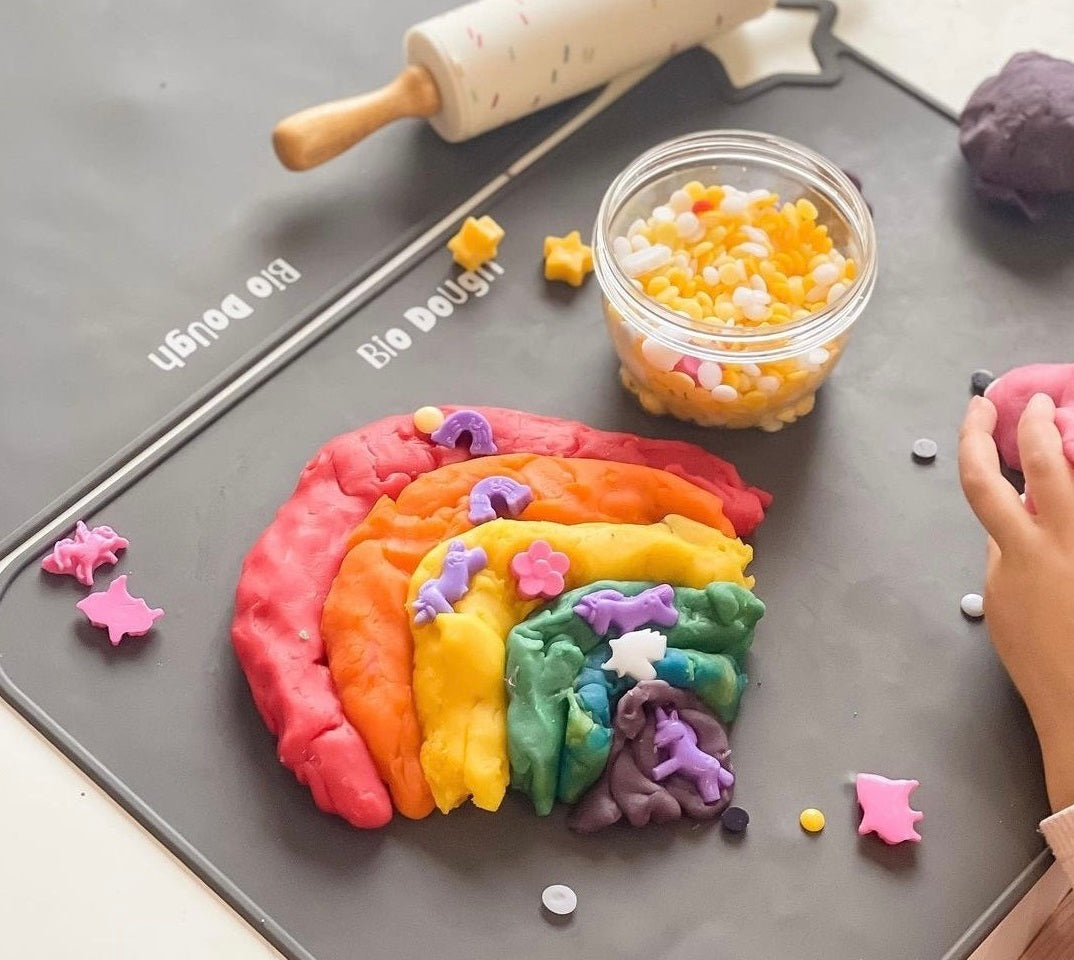
Selected Bio DoUgh products may include biodegradable glitter, sprinkles or figurines. Remove any large inclusions by hand before cleaning, and keep small parts away from younger children and pets.
After the dough itself is gone, loose glitter can often be lifted from washable clothing with a lint roller or a small piece of low-tack tape. Patch test tape on delicate fabric. For carpet, use the vacuum hose after all dough is dry and loose. Do not return recovered dough, glitter or inclusions to the play container after they have touched carpet, clothing, hair or the floor.
Playdough Clean-up Mistakes to Avoid
| Mistake | Why it can cause trouble | Better option |
|---|---|---|
| Rubbing soft dough | Spreads colour and presses dough further into fibres. | Lift the bulk straight up, then let residue dry. |
| Pouring hot water onto carpet | Can turn residue into a paste and over-wet the carpet or underlay. | Remove dry solids first and use cold water only if the carpet maker allows it. |
| Aggressive brushing | May fray, fuzz or change the texture of carpet and delicate fabric. | Loosen gently with a blunt edge and vacuum. |
| Trying several cleaners together | Chemical mixtures can be hazardous and may damage colour or fibres. | Use one manufacturer-approved product exactly as labelled. |
| Using acetone, peroxide, alcohol or WD-40 as a first response | These products can affect dyes, finishes, adhesives or skin. | Begin with mechanical removal, then use a surface-approved cleaner if required. |
| Machine-drying stained clothes | Heat can set a remaining colour mark. | Air-dry, inspect and repeat care-label-safe treatment. |
| Pulling playdough through hair | Causes discomfort and may break hair. | Add conditioner and detangle from the ends in small sections. |
| Returning dropped dough to the tub | Brings dirt, fibres or hair into clean playdough. | Discard contaminated pieces and clean the play area. |
How to Make the Next Play Session Easier to Clean
A little setup reduces most playdough mess without limiting creativity:
- Choose a hard, wipeable floor where possible.
- Place a large washable mat or tablecloth beneath the activity, extending beyond the table edge. Bio DoUgh also offers a silicone play mat for a defined play area.
- Tie long hair back and roll up sleeves before play.
- Offer one or two colours at a time and keep unused tubs closed.
- Use a tray with a raised edge for cutters, stamps, glitter or sprinkles.
- Keep pets away from the play zone.
- Ask children to help collect large pieces before they dry.
- Wipe tools and the table, then seal clean dough in an airtight container.
For age-appropriate setup and supervision ideas, see when children can start using playdough. For broader ingredient and supervision guidance, read is playdough safe and non-toxic?
Why Choose Bio DoUgh for Safer Sensory Play?
Bio DoUgh gives Australian families a soft, highly malleable playdough that is Australian made using 100% food-grade ingredients. It is recommended for children aged two and over, contains wheat and is intended for play, not eating.
| Bio DoUgh feature | What parents should know |
|---|---|
| Australian made | Bio DoUgh is manufactured in Australia, with ingredients sourced from certified Australian suppliers. |
| Food-grade ingredients | The formula uses 100% food-grade ingredients. The finished dough is still a play material and should not be eaten. |
| Soft, malleable texture | The dough is designed to be easy for little hands to roll, press and shape. Supervision and a prepared play area still matter. |
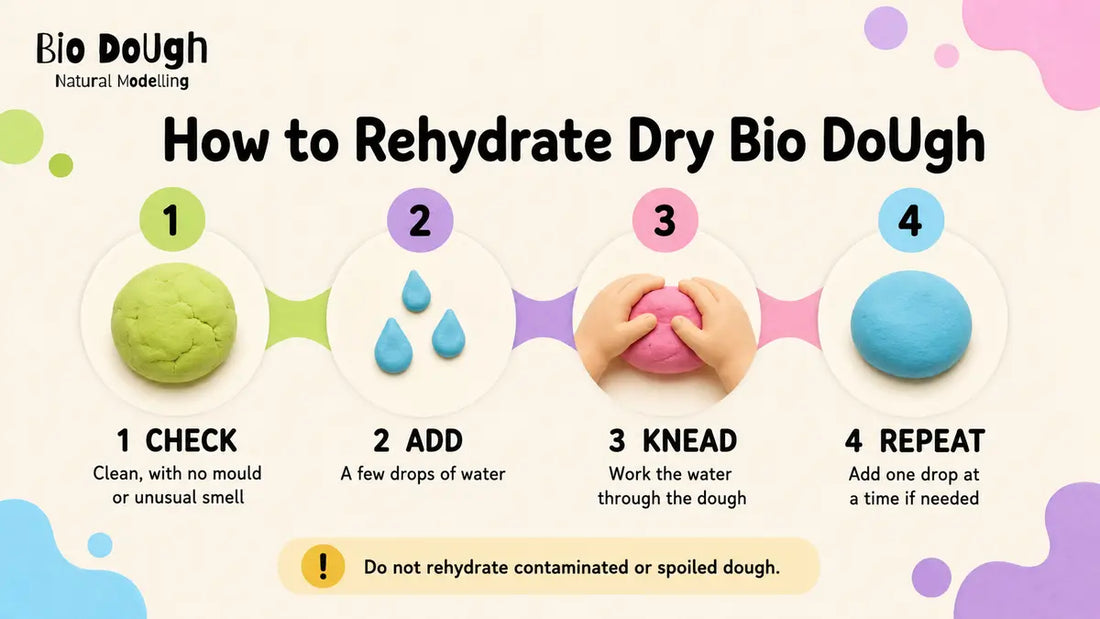
| Rehydratable formula | If otherwise clean Bio DoUgh dries out, a few drops of water can help soften it again. Do not rehydrate dough that has fallen on carpet or become contaminated. |
| Age and allergen guidance | Bio DoUgh recommends ages 2+. It contains wheat, so families with a confirmed wheat allergy should choose an appropriate alternative. |
| Airtight storage | Sealing clean dough after play helps protect its texture and keeps the play area tidier. |
Families who want a generous set for shared creative play can explore the Bio DoUgh Mega Value Bundle. You can also browse the full Australian-made natural playdough range. Check the individual product page for current inclusions, age guidance and care information.
Bio DoUgh also offers a Scent-Free and Dye-Free Bio DoUgh option with no added fragrance or artificial dye. It keeps the brand's soft, malleable texture while giving families a more neutral choice. Use the same careful clean-up process for every dough, because dye-free does not guarantee that a surface or fabric cannot mark.
Frequently Asked Questions
Should I let playdough dry before removing it from carpet?
Yes, once you have lifted the soft bulk without rubbing. Let the embedded residue dry fully, then gently loosen it and vacuum with a hose or nozzle. Check the carpet maker's care instructions before treating any remaining colour mark.
Can I vacuum fresh playdough?
It is better to lift soft pieces first and let the remaining dough dry. A floor head or brush roll can press fresh dough further into the carpet and spread it through the vacuum. Use a hose or narrow nozzle only after the residue is dry and loose.
Can I use hot water to get playdough out of carpet?
Avoid hot water. It can soften and spread the dough, and excess moisture can affect the carpet backing or underlay. Remove dry solids first. Use cold water only if the carpet manufacturer permits it as part of an approved spot-cleaning method.
Will vinegar remove playdough from carpet?
Some cleaning sites suggest vinegar, but it is not suitable for every carpet fibre, dye, finish or backing. Do not use it as a default. Follow the carpet manufacturer's care instructions or ask a professional carpet cleaner.
Does playdough permanently stain carpet?
Not always. Many marks can be improved when the dry material is removed carefully and any remaining colour is treated according to the carpet maker's instructions. Results vary with the fibre, dye, finish, age of the mark and earlier cleaning attempts, so no general method can guarantee complete removal.
How do I remove dried playdough from clothes?
Gently flake off the dry material with a spoon or blunt edge. Rinse from the back with cold water, pretreat with a product approved for the fabric and wash according to the care label. Inspect before using a tumble dryer or iron.
What if playdough colour remains after washing?
Repeat the fabric-safe pretreatment and wash. A colour-safe oxygen stain remover may help some washable items if both labels permit it. Do not apply bleach or solvents without checking the care label, and take delicate items to a professional.
How do I get playdough out of hair without cutting it?
Remove loose pieces, coat the affected section with child-appropriate conditioner, then finger-detangle and use a wide-tooth comb from the ends upwards. Rinse with lukewarm water and shampoo after the solids are gone. Stop if the scalp becomes sore or your child is distressed.
Can I use oil to remove playdough from hair?
Oil may add slip, but it can be messy and harder to wash out. A child-appropriate conditioner is a simpler first choice. Avoid peanut butter because it introduces a food allergen, and never use household solvents on hair or skin.
Can I rehydrate playdough after it has dried into carpet or clothing?
No. Bio DoUgh can be rehydrated when it has dried while otherwise clean and safely stored. Dough recovered from carpet, clothing, hair or the floor may contain fibres, dirt or other contaminants and should be discarded.
When should I call a professional cleaner?
Get professional advice for wool, silk, antique or handmade rugs, dry-clean-only clothing, large or old stains, colour transfer, unclear care instructions, or any surface still marked after the approved method. Share the modelling dough's ingredient information if it is available.
The Bottom Line
The best playdough clean-up method is often the simplest one. Lift the dough rather than rubbing it. Let residue on carpet or fabric dry, then remove the crumbs. Add a cleaner only when the surface instructions allow it. For hair, start with conditioner and gentle detangling instead of household cleaning hacks.
With a washable mat, tied-back hair, small amounts of dough and airtight storage, the next session can be much easier to pack away. Explore the Bio DoUgh Mega Value Bundle for an Australian-made, rehydratable playdough option, and always discard any dough that has become contaminated during clean-up.
Sources and Fact-Checking Notes
- Bio DoUgh FAQ: age guidance, ingredients, airtight storage and rehydration information.
- Bio DoUgh Scent-Free and Dye-Free dough: current product-specific fragrance, dye and texture information.
- ACCC Product Safety care-labelling guide: the purpose of clothing and textile care instructions.
- Godfrey Hirst Australia support guidance: vacuum selection for loop and long-pile carpet and manufacturer-specific stain-care principles.
- WoolSafe fine-fibre care guide: moisture sensitivity, suction-only vacuuming for loop pile and professional help for sensitive fibres.
- Carpet and Rug Institute cleaning and maintenance guidance: removal of solids, vacuuming, blotting, pretesting and carpet-damage cautions.
- Carpet and Rug Institute Spot Solver: pretesting, working from the edge, blotting and cold-water rinsing when appropriate.
- American Cleaning Institute stain removal guide: pretreatment, care-label washing and checking a stain before machine drying.
- Hasbro Consumer Care modelling compound removal guidance: dry-first removal, vacuuming and cold-water guidance for its own product. This manufacturer-specific source supports the general sequence but does not replace Bio DoUgh's instructions or the surface maker's care advice.
This article provides general household clean-up information. Carpet fibres, dyes, backing, garments and hair products vary. Always follow the relevant manufacturer or care-label instructions and seek professional advice when unsure.