Is playdough safe? For most children, it can be a safe and rewarding activity when you choose an age-appropriate, non-toxic product, check its allergens and supervise play. The important catch is that non-toxic does not mean edible. Even playdough made with food-grade ingredients is a play material, not food, and it may contain wheat, salt, colours or scents that are unsuitable for some children.
For Australian parents and carers, a sensible approach is simple: read the label, follow the maker's age guidance, keep playdough out of mouths, wash hands after play and store it properly.
Is Playdough Safe?
|
Parent question |
Short answer |
|
Is playdough safe? |
It can be safe for normal, supervised play when it is age-appropriate, labelled non-toxic and used as directed. |
|
Does non-toxic mean edible? |
No. Non-toxic playdough is still not food and should not be eaten. |
|
Is playdough safe for toddlers? |
Follow the product's age guidance and supervise closely. Bio DoUgh recommends its playdough for children aged two and over. |
|
Can playdough contain allergens? |
Yes. Many formulas contain wheat. Bio DoUgh contains wheat, so it is not suitable for a child with a confirmed wheat allergy. |
|
What if a child swallows some? |
Remove any remaining material from their mouth, keep the packaging and call the Australian Poisons Information Centre on 13 11 26 for advice. Call 000 in an emergency. Do not induce vomiting. |
|
How do I keep playdough hygienic? |
Use clean hands and tools, store it in an airtight container and discard it if it develops mould, an unusual smell or a slimy texture. |
What Does "Non-Toxic Playdough" Actually Mean?
"Non-toxic" is a safety description, not permission to eat the product. It tells parents that the playdough is intended to avoid toxic ingredients when used as directed. It does not automatically mean that the product is edible, allergen-free, suitable for every age or safe in unlimited amounts.
The Australian Competition and Consumer Commission's product safety guidance advises families to look for toys and art materials labelled non-toxic, consider products made from natural materials, supervise young children and wash residue from skin after play.
Use the table below to read common playdough claims more carefully.
|
Label or claim |
What it can tell you |
What you still need to check |
|
Non-toxic |
The product is intended for safer play when used as directed. |
It may still be unsuitable to eat, a choking risk or an allergen risk. |
|
Food-grade ingredients |
The formula uses ingredients of a grade associated with food production. |
The finished playdough is not necessarily a food and may contain a high level of salt. |
|
Natural |
The product uses ingredients described as naturally derived. |
Natural ingredients can still cause allergies or skin irritation in some people. |
|
Taste-safe |
This is commonly used to describe ingredients that are not expected to be toxic from a small accidental taste. |
It is not the same as edible, nutritionally suitable or safe to consume freely. Check salt and allergens. |
|
Gluten-free or wheat-free |
The maker has specifically addressed that ingredient or allergen. |
Confirm the exact label and cross-contact information if your child has a diagnosed condition. |
|
Hypoallergenic |
The product is positioned as less likely to cause a reaction. |
No product can guarantee zero reactions. Check the complete ingredient and allergen information. |
What Is Playdough Usually Made From?
Many playdough formulas start with familiar ingredients such as flour, water, salt and oil. Commercial products may also use colours, scents, texture agents or preservatives to improve appearance, feel and shelf life. Recipes differ, so the safest choice is a product that clearly explains its age guidance, allergens, storage and intended use.
Food-grade ingredients can offer useful reassurance about ingredient quality, but they do not turn playdough into a snack. Salt is a good example. It helps create and preserve the familiar dough texture, yet swallowing a large amount of a salty dough may be harmful. This is why parents should treat every playdough as a supervised play material, even when its ingredients sound familiar.
The Main Playdough Safety Checks for Parents
1. Age and mouthing behaviour
Toddlers explore with their mouths, so readiness matters as much as the number on the label. A child who is still likely to bite, suck or swallow play materials needs very close, hands-on supervision. Follow the manufacturer's age recommendation and use only age-appropriate tools or accessories.
Bio DoUgh recommends its playdough for children aged two and over. For a fuller age-by-age explanation, read when children can start using playdough.
2. Wheat, gluten and other allergens
Wheat flour is common in playdough. The Australasian Society of Clinical Immunology and Allergy specifically advises people with wheat allergy to check whether playdough contains wheat and avoid it when it does.
Coeliac disease is different from wheat allergy. Coeliac Australia explains that gluten touching the skin does not harm a person with coeliac disease, but a gluten-free playdough may reduce the chance of accidental ingestion, particularly for younger children. Good hand hygiene and keeping playdough away from the mouth remain important.
Bio DoUgh contains wheat. If your child has a confirmed wheat allergy, coeliac disease or another relevant medical condition, check with their healthcare professional and choose an appropriate alternative.
In childcare, school or playdate settings, use clearly labelled batches and separate tools and clean surfaces for children with known allergies. Ask children to wash their hands before and after play. Do not share dough that has been mouthed, and discard any batch that may have been contaminated with food or another material.
3. Sensitive skin, colours and scents
Natural does not mean reaction-proof. A child may be sensitive to a colour, scent or another ingredient, even when the overall formula is described as natural or non-toxic.
If your child has very sensitive skin, eczema or known contact allergies, review the product information before play. Consider a short first session, keep the material away from broken skin and stop if redness, itching, swelling or discomfort develops. Wash the skin and seek medical advice if you are concerned. Call 000 for breathing difficulty, collapse or another severe reaction.
4. Eye contact
If playdough gets into a child's eye, hold the eyelids open and gently flood the eye with cool running water for 15 minutes. Keep the packaging, or take a clear photograph of it, and call the Australian Poisons Information Centre on 13 11 26 for advice. Seek urgent medical help for severe or persistent pain, marked redness or any change in vision.
5. Choking and small accessories
Playdough itself should not go in a child's mouth. Small cutters, figurines, beads, loose decorations and broken tool pieces can add a separate choking risk. Match accessories to the child's age, inspect them before each session and remove anything damaged or small enough to swallow.
6. Cleanliness, storage and mould
Playdough is handled repeatedly and can collect crumbs, dirt and germs. Ask children to wash and dry their hands before play, use a clean surface and avoid sharing dough when someone is unwell.
After play, return the dough to an airtight container. Discard it if you notice mould, a sour or unusual smell, a slimy feel or obvious contamination. Do not try to rescue mouldy playdough by removing only the visible patch.
7. Pets and playdough
Keep all playdough away from dogs, cats and other pets. Homemade playdough can contain enough salt and cream of tartar to cause serious poisoning in animals. If a pet eats playdough, contact your veterinarian or the Australian Animal Poisons Helpline on 1300 869 738, even if the animal appears well.
A Simple Playdough Safety Routine
|
Stage |
What to do |
Why it matters |
|
Before play |
Read the age guidance and warnings. Check wheat and other allergens. Inspect the dough and tools. Wash and dry hands. |
Helps identify suitability, contamination and damaged accessories before the activity begins. |
|
During play |
Supervise, especially toddlers. Keep dough away from mouths, eyes and broken skin. Use age-appropriate tools and keep pets away. |
Reduces ingestion, choking, irritation and pet-poisoning risks. |
|
After play |
Wash hands and any residue from skin. Clean tools. Seal the dough in its container and store it as directed. |
Supports hygiene and helps the dough remain in good condition. |
|
Before the next session |
Check for mould, unusual odour, slime, debris or damaged tools. |
Prevents reuse of contaminated material or unsafe accessories. |
Is Homemade Playdough Safe?
Homemade playdough can be enjoyable, but safety depends on the recipe, the preparation method and how it is used. Pantry ingredients are not automatically harmless in every quantity. Many recipes contain a substantial amount of salt, and some include ingredients that may be unsuitable for a particular child.
If you make playdough at home:
-
Use a trusted recipe with clearly stated quantities.
-
Keep boiling water and hot mixtures as adult-only steps.
-
Check flour, colouring, fragrance and other additions against your child's allergies.
-
Do not add craft glitter, unsafe decorations or undiluted essential oils.
-
Treat the finished dough as non-edible and supervise play.
-
Label and date the container, store it airtight and discard it if its appearance, smell or texture changes.
Bio DoUgh's easy homemade playdough recipe uses boiling water, so preparation is an adult-only job. The recipe contains wheat and salt and is intended for play, not eating.
What If My Child Eats Playdough?
Stay calm and remove any playdough that remains in the child's mouth. Keep the product container or take a clear photo of the label, and note the likely amount and time of ingestion.
Australian Healthdirect guidance for swallowed substances says to call the Poisons Information Centre on 13 11 26 for advice. Do not try to make the child vomit. If the child collapses, has trouble breathing, becomes unconscious or has a seizure, call Triple Zero (000) for an ambulance.
This information is general and does not replace individual medical or poisons advice.
Why Choose Bio DoUgh for Safer Sensory Play?
Bio DoUgh gives Australian families a practical combination of Australian-made manufacturing, 100% food-grade ingredients, a soft and highly malleable texture, and a rehydratable formula. It is designed as non-toxic playdough for children aged two and over, but it is not edible and contains wheat. Families wanting a wider all-in-one play option can explore the Bio DoUgh Mega Value Bundle.
Parents deserve clear information, not vague reassurance. Here are the relevant Bio DoUgh facts to consider when choosing a product:
|
Bio DoUgh feature |
What parents should know |
|
Australian made |
Bio DoUgh is manufactured in Australia and the brand states that its ingredients are sourced from certified Australian suppliers. |
|
Food-grade formula |
Bio DoUgh describes its playdough as made from 100% food-grade ingredients and scientifically developed for a soft, consistent texture. |
|
Natural, malleable feel |
Bio DoUgh positions its dough as a natural, highly malleable option designed to stay soft and easy for children to shape. |
|
Non-toxic |
It is designed for play and is not intended to be eaten. Adult supervision is still required. |
|
Age guidance |
Bio DoUgh recommends its playdough for children aged two and over. |
|
Allergen information |
Bio DoUgh contains wheat and is not suitable for a child with a confirmed wheat allergy. |
|
Rehydratable |
A few drops of water can soften dry Bio DoUgh, helping extend its usable play life when it is otherwise clean and in good condition. |
|
Themed play options |
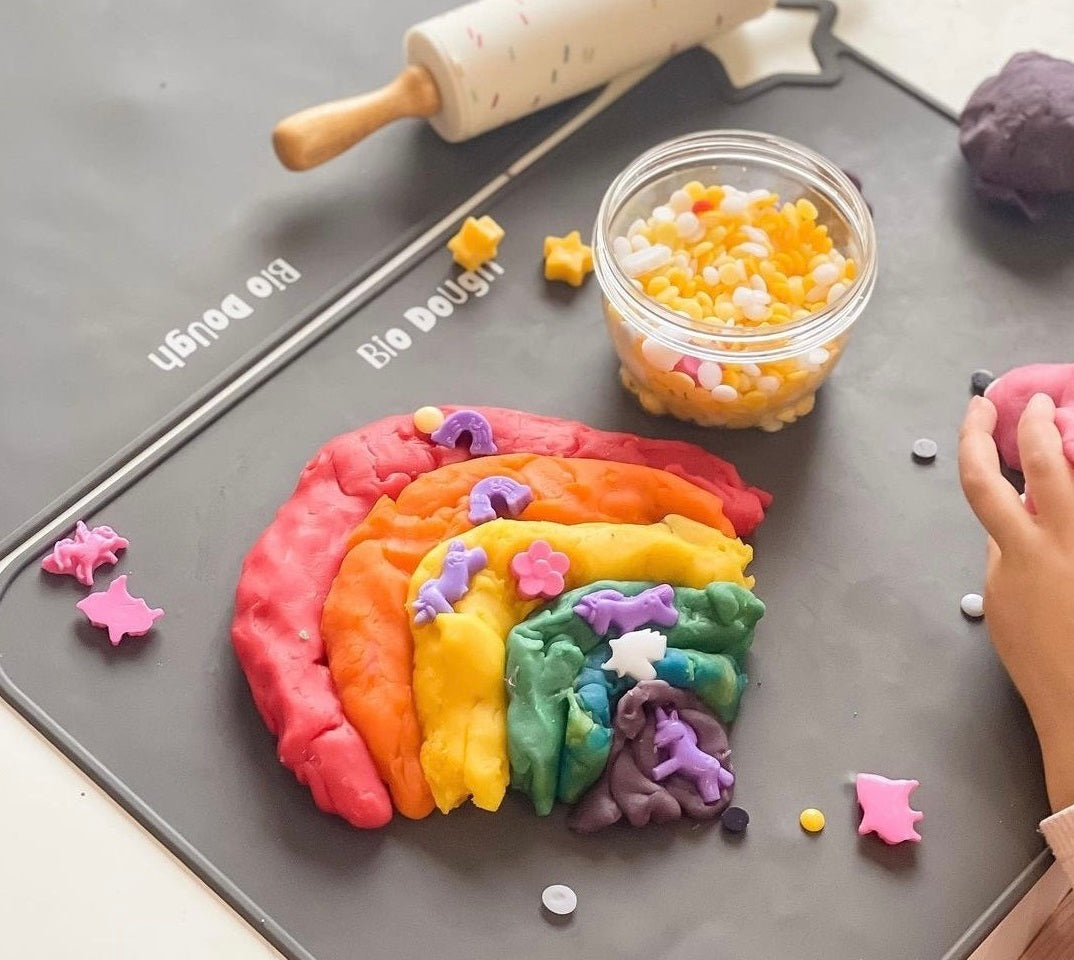
Selected Bio DoUgh products may include biodegradable glitter, sprinkles or figurines. Inclusions vary, so check the individual product page, age guidance and choking warnings. Decorative play elements are not food. |
For families comparing natural playdough, Bio DoUgh's practical difference is the combination of a soft, malleable feel and a rehydratable formula. Selected themed options can also add biodegradable glitter, sprinkles or figurines for imaginative play. You can also explore Bio DoUgh's Australian-made natural playdough range. Always check the individual product page and packaging because inclusions, age guidance, allergens and care instructions can vary.
Safe Playdough Checklist for Australian Families
Before buying or opening a new playdough, ask:
-
Is it clearly labelled non-toxic?
-
Is there an age recommendation?
-
Are ingredients or allergens disclosed, especially wheat?
-
Is it intended for children and supplied by a traceable Australian business?
-
Are the colours, scents and accessories suitable for my child?
-
Can I store it securely in a labelled, airtight container?
-
Will an adult be able to supervise the session?
No label replaces supervision, but clear product information helps parents make a more confident choice.
Frequently Asked Questions
Is playdough toxic if a child licks it?
A product labelled non-toxic is intended for safer normal play, but it is still not food. If your child swallows playdough or you are unsure how much entered their mouth, keep the packaging and call the Australian Poisons Information Centre on 13 11 26 for individual advice.
Is playdough edible if it uses food-grade ingredients?
No. Food-grade describes ingredient quality, not the intended use of the finished product. Playdough may contain salt, allergens and other ingredients in quantities that make it unsuitable to eat.
Is playdough safe for two-year-olds?
Use the manufacturer's age guidance and consider your child's tendency to mouth objects. Bio DoUgh recommends its playdough for children aged two and over with adult supervision.
Is playdough safe for children with coeliac disease?
Coeliac Australia states that touching gluten does not harm someone with coeliac disease, but wheat-based playdough can create an accidental ingestion risk. A gluten-free alternative, close supervision and thorough handwashing can help reduce that risk. Ask your child's healthcare professional for individual guidance.
Is Bio DoUgh gluten-free?
No. Bio DoUgh contains wheat. It should not be used by a child with a confirmed wheat allergy, and families managing coeliac disease should consider an appropriate gluten-free alternative.
When should playdough be thrown away?
Discard playdough if it has mould, an unusual smell, a slimy texture, heavy contamination or debris that cannot be removed. Replace damaged tools or accessories as well.
What should I do if playdough gets in my child's eye?
Hold the eyelids open and gently rinse the eye with cool running water for 15 minutes. Keep the packaging and call the Australian Poisons Information Centre on 13 11 26. Seek urgent medical help for severe pain, persistent redness or a change in vision.
Is playdough safe around dogs and cats?
Keep it out of reach of pets. Salt and cream of tartar in some playdough recipes can poison animals. If a pet eats playdough, call your veterinarian or the Australian Animal Poisons Helpline on 1300 869 738, even if the pet seems well.
Can children share playdough at childcare or school?
They can share only when the setting's allergy and hygiene procedures allow it. Use labelled batches, separate tools and clean surfaces for known allergies, wash hands before and after play, and discard dough that has been mouthed or contaminated.
Are scented or glitter playdoughs safe?
They can be suitable when the product is age-appropriate and used as directed, but scents, colours and decorative inclusions may not suit every child. Check the product details, supervise play and stop if irritation develops. Keep loose glitter, sprinkles and small figurines out of mouths.
How do I rehydrate dry Bio DoUgh?
If the dough is clean and shows no mould, unusual smell or slime, add only a few drops of water and knead them through. Add more water one drop at a time if needed. Do not rehydrate contaminated or spoiled dough.
The Bottom Line
So, is playdough safe? It can be, provided parents choose an age-appropriate non-toxic product, check allergens, supervise play and keep it out of mouths. "Natural", "food-grade" and "non-toxic" can all be useful signals, but none of them means edible or risk-free.
Bio DoUgh offers Australian-made, food-grade, non-toxic playdough for children aged two and over. Because it contains wheat and is not intended for eating, the same sensible rules still apply: check suitability, supervise closely, wash hands and store the dough properly.
Ready for colourful, creative play? Explore Bio DoUgh's natural playdough range.