Need a no-cook playdough recipe for a rainy afternoon or a last-minute activity? This version takes about five minutes to mix and does not use a stovetop. An adult still needs to boil and pour the water, and the dough needs extra time to cool completely before children touch it.
There is one more important point. Ordinary flour is a raw ingredient and can carry harmful bacteria. For a no-stovetop recipe intended for play, choose flour that the manufacturer labels as heat-treated or ready to use without further cooking. If you only have standard plain flour, use a properly cooked playdough method instead. Never eat or taste homemade playdough.
The Five-Minute Method
| Stage | What to do | Who does it? |
|---|---|---|
| Measure | Combine 1 cup heat-treated flour, 1/4 cup fine salt and 1 teaspoon cream of tartar in a heat-resistant bowl. | Adult, with measured pouring help from an older child if appropriate |
| Add liquid | Mix 1 tablespoon vegetable oil and a few drops of food colouring into 1/2 cup freshly boiled water. | Adult only |
| Mix | Add the hot liquid gradually and stir. Add more water, one tablespoon at a time, only if needed. | Adult only |
| Cool | Spread the dough slightly in the bowl and wait until the centre is completely cool. | Adult checks |
| Knead | Knead for one or two minutes until smooth. Fix stickiness or dryness in small increments. | Adult first, child only after cooling |
| Store | Place clean dough in a labelled airtight container. | Adult or supervised child |
No-Cook Playdough Ingredients
This makes one small family batch.
- 1 cup commercially heat-treated flour, or flour specifically labelled as ready to use without further cooking
- 1/4 cup fine table salt
- 1 teaspoon cream of tartar
- 1 tablespoon neutral vegetable oil
- 1/2 to 3/4 cup freshly boiled water
- A few drops of food colouring, optional
You will also need a heat-resistant mixing bowl, measuring cups and spoons, a sturdy mixing spoon, a clean work surface and an airtight container.
This recipe is a homemade play material, not Bio DoUgh's commercial formula. Ingredient performance varies, so add the water slowly rather than pouring in the full amount at once.
How to Make No-Cook Playdough in Five Minutes
1. Prepare the space
Wash and dry your hands, bowl, spoon and work surface. Keep the kettle cord, boiling water and hot bowl well away from children. Tie back long hair and clear food from the area so raw ingredients do not spread to ready-to-eat items.
2. Mix the dry ingredients
Place the heat-treated flour, salt and cream of tartar in the heat-resistant bowl. Stir until evenly combined. Breaking up lumps now makes the finished dough smoother.
3. Colour the water
An adult should measure 1/2 cup of freshly boiled water into a heat-safe jug. Stir in the oil and food colouring. Start with a small amount of colour because it is easier to deepen a shade than lighten it.
4. Add the hot liquid gradually
Pour the liquid into the dry mixture in a slow stream while stirring with a sturdy spoon. The mixture will look rough and may seem too dry at first. Keep stirring for 30 to 60 seconds before adding more water.
If dry flour remains, add another tablespoon of hot water and stir again. Repeat only as needed. Different flours absorb different amounts, and too much water is the most common cause of sticky playdough.
5. Cool it completely
The mixture can remain hot in the centre even when the surface feels warm rather than hot. Keep children away. Let the dough sit in the bowl, then split it into two or three pieces with the spoon to release heat. An adult should check the centre of every piece before kneading.
The five-minute claim refers to measuring and mixing. Cooling time is additional and depends on batch size, room temperature and how the dough is divided.
6. Knead and adjust
Once completely cool, knead the dough for one or two minutes on a clean surface. It should feel smooth, soft and able to hold a simple ball without coating your fingers.
Use the troubleshooting table below if the texture is not right. Make one small adjustment, knead thoroughly, then reassess.
No-Cook Playdough Troubleshooting
| Problem | Likely reason | What to try |
|---|---|---|
| Sticky and coating fingers | Too much water or not enough kneading | Knead for another minute. If still sticky, add heat-treated flour one teaspoon at a time. |
| Dry and cracking | Too little water | Add water a few drops at a time and knead fully before adding more. |
| Greasy surface | Too much oil | Knead in a teaspoon of heat-treated flour. Avoid adding a large amount at once. |
| Grainy texture | Coarse salt or incomplete mixing | Use fine table salt next time and give this batch more kneading time. |
| Colour on hands | Too much colouring or colouring not dispersed | Wear gloves while preparing, knead longer and reduce the colouring in the next batch. |
| Dough feels hot inside | The batch has not cooled evenly | Stop. Split it with the spoon and wait longer. Do not give it to a child until every piece is cool. |
Why Flour Safety Matters in a No-Cook Recipe
Flour looks dry and harmless, but it is generally a raw agricultural product. The US Food and Drug Administration explains that milling does not reliably kill bacteria and advises against letting children play with raw flour dough. It also says not to rely on home heat-treatment methods because they might not heat the flour evenly enough.
That is why this recipe specifies commercially heat-treated flour. A kettle method is handy, but boiling water is not a proven substitute for the flour maker's treatment. Check the packet. If it does not say the flour is safe without more cooking, use the cooked method in Bio DoUgh's broader homemade guide. You can also choose ready-made playdough.
Whether homemade or bought, playdough is for play, not eating. Salt can also be harmful in large amounts. Closely supervise children, remove dough from the mouth immediately and follow the product or recipe guidance.
What Children Can Help With
Making playdough can be enjoyable, but jobs should match the child's age, readiness and ability to follow directions.
| Task | Suitable approach |
|---|---|
| Choosing a colour | Let the child point to or name a colour before hot preparation begins. |
| Counting scoops | An older child can count pre-measured dry ingredients with an adult. Keep raw flour dust controlled. |
| Pouring dry ingredients | Consider this only for a child who can pour carefully and keep hands away from their face. Wash hands afterwards. |
| Boiling or pouring water | Adult only. Keep the child out of reach of the kettle, jug, steam, bowl and hot mixture. |
| Testing temperature | Adult only. Check the centre, not just the surface. |
| Kneading and playing | Child only after the entire batch is completely cool and the area has been cleared of hot equipment. |
For product-specific age guidance, see when children can start using playdough.
Optional Colour and Theme Ideas
Keep the first batch simple. Once the method is working, try one of these low-fuss ideas:
- Divide the cool dough into three portions and tint each with a different food colouring.
- Make a colour-mixing activity with yellow and blue, red and yellow, or red and blue portions.
- Press large, age-appropriate cutters into a single-colour batch.
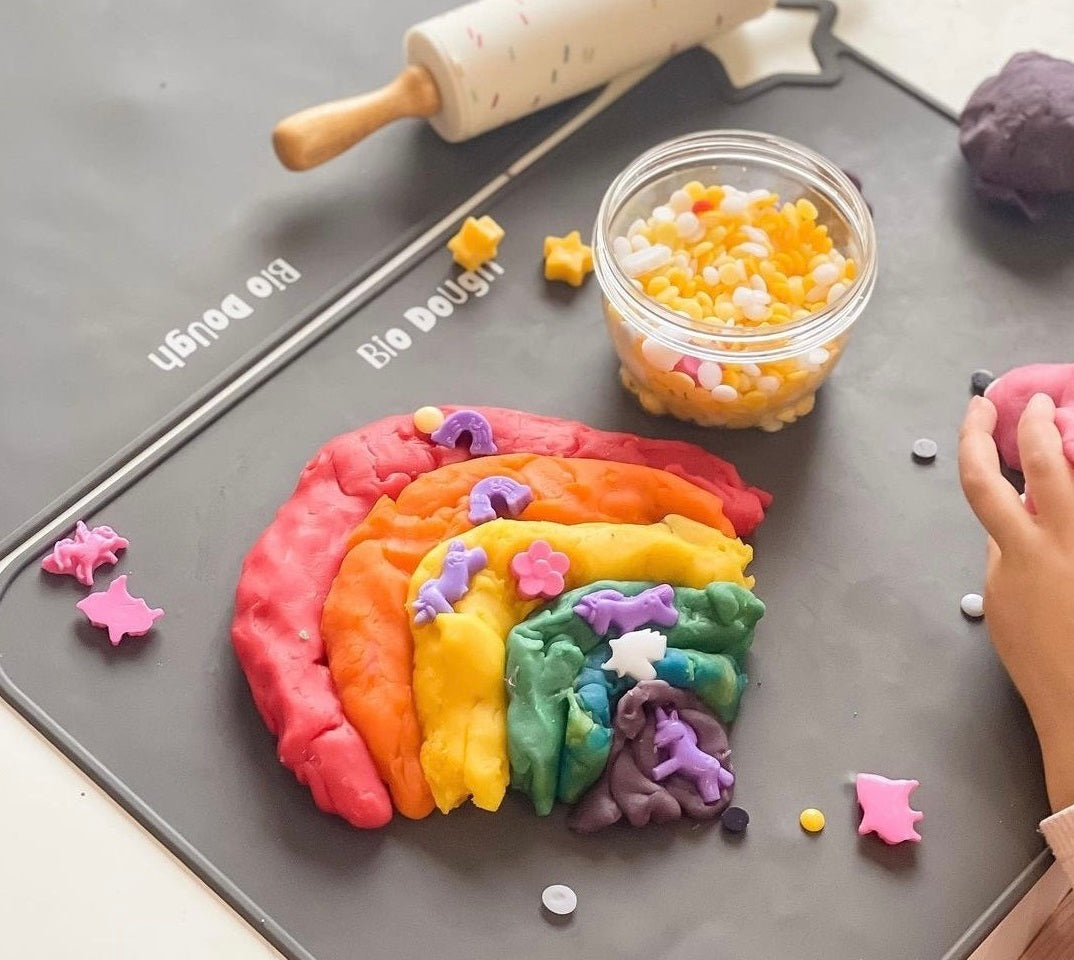
- Pair pastel dough with a unicorn or rainbow printable.
- Add a small amount of Bio DoUgh plant-based biodegradable glitter only after checking its product page and age guidance.
Avoid essential oils, strong fragrances, cleaning products and unlabelled craft powders. They can introduce skin, breathing or allergy concerns. Small beads, sequins, buttons, figurines and sprinkles are not suitable for children who mouth objects and may be choking hazards for children under three.
Storage, Hygiene and When to Throw It Away
Homemade playdough has been handled in a home environment and does not have a universal safe storage period. A conservative routine is more useful than a promise that it will last for months.
- Wash and dry hands before and after every session.
- Use a clean mat or table and clean tools.
- Seal the dough in a labelled airtight container after play.
- Keep it in a cool, dry place unless the recipe or ingredient manufacturer directs otherwise.
- Make a fresh small batch regularly rather than keeping a large shared batch indefinitely.
- Discard any piece that has been mouthed or mixed with food, dirt, carpet fibres, hair or pet debris.
- Throw the whole batch away if it smells unusual, becomes slimy, changes unexpectedly or shows mould.
- Do not share a contaminated batch between children.
The National Health and Medical Research Council gives clear hygiene advice for care settings. Wash hands before and after play, store dough airtight and throw away dough that has been mouthed or is visibly dirty. Families can use the same simple steps at home.
Homemade Playdough or Ready-Made Playdough?
Both can have a place in family play. The better choice depends on your time, available ingredients, allergen needs and willingness to make and monitor a fresh batch.
| Consideration | Homemade no-cook batch | Bio DoUgh |
|---|---|---|
| Preparation | About five minutes to mix, plus cooling and clean-up | Ready to open and play |
| Formula | Depends on your ingredients and measuring | Consistent commercial Bio DoUgh formula |
| Texture | Can vary by flour, water and kneading | Designed to be soft and highly malleable |
| Storage | Requires a clean airtight container and regular inspection | Store clean dough airtight and follow current product care guidance |
| Allergens | Check every ingredient used | Contains wheat. Check the product page for current guidance. |
| Eating | Not edible | Non-toxic does not mean edible. Bio DoUgh is a toy and is not meant to be consumed. |
Why Choose Bio DoUgh When Time Is Short?
Bio DoUgh is an Australian-made playdough made with 100% food-grade ingredients sourced from certified Australian suppliers. It is soft, highly malleable and designed for little hands to roll, press and shape. Clean Bio DoUgh that has dried slightly can be refreshed with a few drops of water, following the current care instructions.
Bio DoUgh is recommended for children aged two and over and contains wheat. It is a play material, not food, so adult supervision and handwashing still matter.
Bio DoUgh also makes a Scent-Free and Dye-Free Bio DoUgh option with no added fragrance or artificial dye. It offers the same soft, malleable play experience for families who want a ready-made, neutral alternative without mixing a homemade batch. Check the current label for age, allergen and care information.
Families who want multiple colours and tools ready for regular play can explore the Bio DoUgh Mega Value Bundle. The contents and price may change, so check the product page before publishing or purchasing. You can also browse the Bio DoUgh natural playdough range.
Frequently Asked Questions
Is this really a no-cook playdough recipe?
It does not use a stovetop or microwave, but an adult still uses freshly boiled water. The mixture becomes hot and must cool fully before children touch it. Five minutes refers to preparation and mixing, not cooling.
Can I use ordinary plain flour?
For a no-stovetop recipe used by children, commercially heat-treated flour is the more responsible choice. Ordinary flour is generally raw. If your packet does not say it is heat-treated or suitable without further cooking, use a properly cooked method instead.
Can I heat-treat flour at home?
The FDA advises against relying on home heat treatment because household methods might not heat every part of the flour evenly enough. Use a manufacturer-treated product or choose a properly cooked recipe.
Is homemade playdough edible?
No. Do not serve, taste or encourage children to eat it. It can contain raw agricultural ingredients and a large amount of salt. Even natural or food-grade ingredients do not turn a toy into food.
Why is my no-cook playdough sticky?
It may contain too much water or need more kneading. Knead for another minute after cooling. If it still coats your fingers, add heat-treated flour one teaspoon at a time.
Can I make it without cream of tartar?
You can, but the texture and keeping quality may change. Rather than replacing it with an untested ingredient, make a smaller batch and expect a different result.
Can my toddler help make the playdough?
A child can choose a colour or count pre-measured ingredients, depending on readiness. Boiling, pouring, hot mixing and temperature testing are adult-only tasks. Bio DoUgh recommends its product for ages two and over, and close supervision is essential.
How should I store homemade playdough?
Seal clean dough in a labelled airtight container and keep it in a cool, dry place unless your ingredients require different storage. Inspect it before each session and discard it if mouthed, contaminated, slimy, unusually smelly or mouldy.
Can I add glitter?
Only use a product that is clearly labelled for the intended activity, and follow its age, allergy and supervision guidance. Avoid loose small inclusions for children who mouth objects or are under three.
The Bottom Line
A quick no-cook playdough can be mixed in about five minutes. An adult must handle the hot water, and the batch must cool fully before play. Use commercially heat-treated flour, add water slowly and label the dough as not edible.
Some days, there is no time for measuring, hot mixing and storing a fresh batch. The Bio DoUgh Mega Value Bundle offers a ready-to-play Australian-made option with several colours and tools. Check the current age and allergen details before use.
Sources and Fact-Checking Notes
- Bio DoUgh FAQ: age guidance, ingredients, wheat, storage and rehydration information.
- Bio DoUgh Scent-Free and Dye-Free dough: current product-specific fragrance, dye and texture information.
- Bio DoUgh Mega Value Bundle: current product description and inclusions. Recheck before publishing because inclusions and prices can change.
- Raising Children Network playdough activities: Australian activity guidance and boiling-water playdough method.
- FDA flour safety guidance: raw-flour hazards, cleaning guidance and warning against child play with raw flour dough or home heat-treatment assumptions.
- NHMRC healthy environment guidance: handwashing, airtight storage and contaminated-dough disposal in education and care settings.
- ACCC kids' toys guide: age labels, supervision and small-parts precautions.
This is general play and household information, not food-safety or medical advice. Follow ingredient labels, product instructions and local health advice.