Playdough is one of those endlessly satisfying materials that children love and parents trust, but most people have never stopped to wonder what actually goes into it. The short answer is that playdough is made from a surprisingly simple combination of everyday ingredients that work together to create that soft, pliable, endlessly shapeable texture.
This guide covers what playdough is made of at a fundamental level, what role each ingredient plays, and how Bio DoUgh's 100% food-grade Australian formula takes those basics to the highest possible standard for Australian families.

Playdough is primarily made of flour, salt, water, oil and cream of tartar. Food colouring and scent are added to create the different colours and aromas. Each ingredient has a specific job: flour provides structure, salt acts as a natural preservative, oil keeps the dough soft, cream of tartar creates elasticity and water binds everything together.
Bio DoUgh is made with 100% food-grade ingredients sourced from certified Australian suppliers, giving it an exceptionally soft, safe texture designed specifically for little hands. For a complete look at playdough safety and ingredient guidance, visit the is playdough safe and non-toxic guide.
The Six Core Playdough Ingredients and What They Do
Whether you are making playdough at home or choosing a quality commercial product, the same six core ingredients appear in almost every formula. Here is what each one contributes.
1. Flour
Flour is the structural backbone of playdough. It contains starch and proteins that, when combined with water, form gluten, the network of proteins that gives dough its cohesive, mouldable quality. The type of flour matters enormously. Wheat flour is the most common choice because its starch composition (a balance of amylose and amylopectin) creates dough that is firm enough to hold a shape but pliable enough to roll, press and cut.
The proportion of flour to water determines whether the dough is firm or soft. Too much flour produces a dry, crumbly texture. The right balance creates smooth, responsive dough that springs back gently under pressure.
2. Salt
Salt serves two important functions in playdough. First, it acts as a natural preservative by binding free water molecules in the dough, which reduces the moisture available for microbial growth. Second, salt contributes to the texture by interacting with the starch and gluten network to produce a smoother, more consistent result. A higher salt content also acts as a deterrent to tasting, which is an important consideration in a play material designed for young children.
3. Water
Water is the activating ingredient that makes everything else work. It hydrates the flour, triggering starch gelatinisation and gluten formation. The ratio of water to flour is one of the most critical variables in playdough. Too much water produces sticky, wet dough while too little results in dry, fragile material that crumbles rather than holds together. The temperature of the water also matters: warm water accelerates gelatinisation, which is why cooked recipes often produce a smoother result than cold-water methods.
4. Oil
Oil is what gives playdough its wonderful, non-sticky softness. It coats the starch and protein particles in the dough, acting as a lubricant that prevents the dough from sticking to hands, tools and work surfaces. Oil also extends the workable life of the dough by slowing down the rate at which moisture evaporates. Vegetable oil and similar food-grade oils are the preferred choice in quality playdough formulations.
5. Cream of Tartar
Cream of tartar is one of the most important ingredients in high-quality playdough, and one that many people do not recognise by name. It is a natural, acidic compound derived from the process of wine fermentation. It is the same ingredient used in baking to stabilise egg whites and create fluffier cakes.
In playdough, cream of tartar does several valuable things at once. Its acidity affects the gluten structure to make the dough more elastic and stretchy rather than stiff and brittle. It also acts as an emulsifier, keeping the oil evenly distributed throughout the dough so it does not separate. And it prevents the salt from crystallising, which results in a silkier, smoother finished texture. Quality playdough made with cream of tartar holds together better, lasts longer and feels noticeably more pleasant to work with.
6. Colour and Scent
Colour is added to give each batch its distinctive appearance. Food-grade dyes are mixed into the water before combining with the dry ingredients, ensuring even colour distribution throughout the dough. Scent can be added using natural or food-grade aromatic ingredients, a feature that Bio DoUgh takes to a particularly delightful level with a wide variety of unique natural scents across its colour range.
Why Does Playdough Stay Soft? The Science Behind the Texture
The softness and pliability of playdough comes from the interplay between three key ingredients: starch, water and oil.
When flour meets warm water, the starch granules absorb moisture and swell in a process called gelatinisation. This creates the thick, viscous network that gives playdough its body. Within the starch, a component called amylopectin creates pockets that trap water molecules and hold them in the dough structure, keeping it moist and pliable over time rather than drying out rapidly.
Oil lubricates the starch network, reducing stickiness and creating that smooth, silky feel that makes quality playdough so satisfying to handle. Cream of tartar refines the texture further by emulsifying the oil into the dough and modifying the gluten structure for maximum elasticity. The result is dough that stretches without snapping, holds a shape without crumbling and feels genuinely pleasant in a child's hands.
What Is Homemade Playdough Made Of?
Homemade playdough uses exactly the same core ingredients: flour, salt, water, oil and cream of tartar. The proportions vary between recipes, but a standard cooked batch typically uses around two cups of flour, one cup of salt, two cups of water, two tablespoons of oil and one to two teaspoons of cream of tartar, cooked gently until the mixture forms a soft ball.
One important consideration for any homemade recipe is flour safety. Ordinary flour is generally a raw agricultural product, and using heat-treated flour (or a proper cooking method) is an important step for any playdough intended for young children. Bio DoUgh's complete homemade playdough guide covers both a cooked method and a quick version with full safety guidance.
What Is Bio DoUgh Made Of?
Bio DoUgh is made with 100% food-grade ingredients sourced from certified Australian suppliers. Every ingredient that goes into Bio DoUgh meets food-grade quality standards, the same level of quality used in ingredients intended for human consumption, rather than industrial-grade alternatives that may be found in lower-quality play materials.
Bio DoUgh is manufactured entirely in Australia. Its formula is built on the same core principles as high-quality playdough (flour, salt, water, oil and cream of tartar), but refined to produce an exceptionally soft, highly malleable texture that is designed specifically for little hands from age two and over.
Bio DoUgh contains wheat and is not intended to be eaten. It is a play material. For allergen details and ingredient guidance, the Bio DoUgh FAQ covers everything families need to know.
What Makes Bio DoUgh's Ingredients Different?
The quality of playdough ingredients makes a direct, noticeable difference to the texture and play experience. Food-grade ingredients produce a cleaner, softer, more consistent result than industrial alternatives. Bio DoUgh's commitment to food-grade sourcing from certified Australian suppliers means that every tub delivers a reliably excellent texture from the first use.
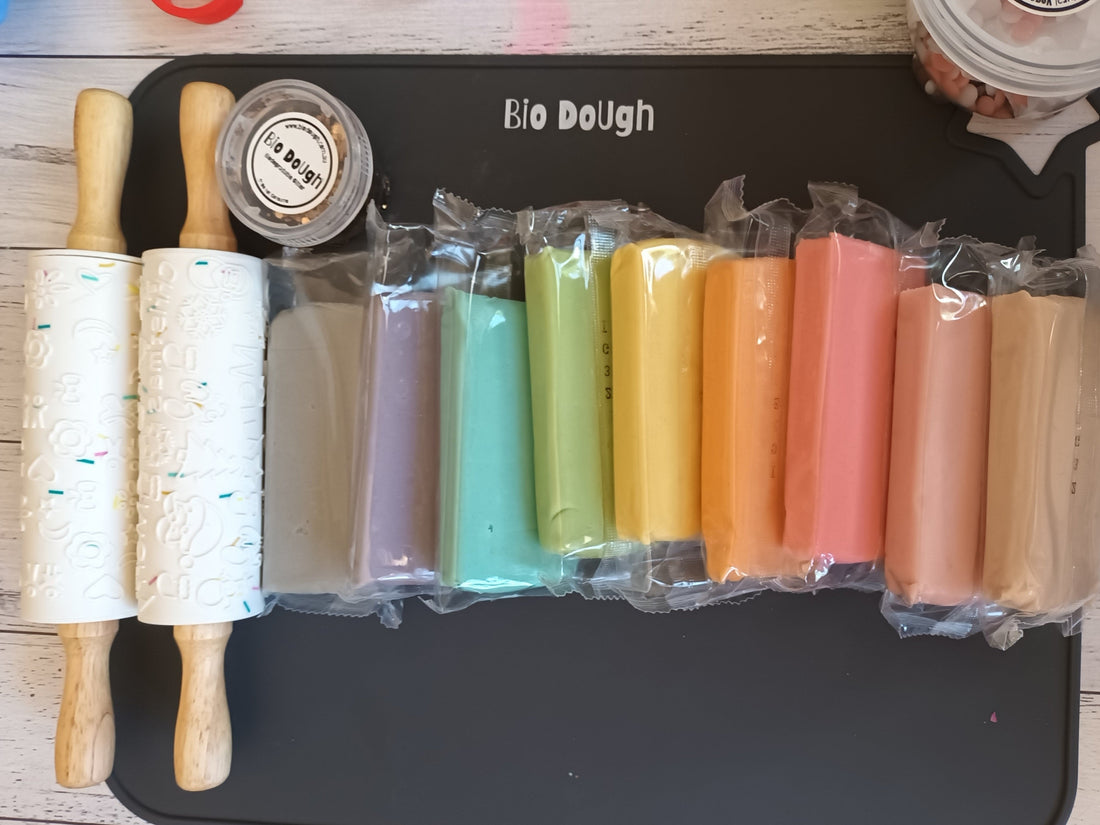
The scent is another standout feature. Bio DoUgh comes in many colours, each with a unique natural scent: coconut, fairy floss, strawberry, watermelon and more. These scents add a wonderful extra sensory dimension to play sessions, making Bio DoUgh a genuinely multi-sensory experience rather than a standard coloured dough.
For families who prefer a completely neutral option, the Scent-Free and Dye-Free Bio DoUgh delivers the same food-grade formula and exceptional soft texture with no added fragrance or artificial dye. It is an ideal choice for sensory-sensitive children or for families who want a pure, stripped-back play experience.
How Ingredients Affect Playdough Quality
Understanding the ingredients helps explain why some playdoughs feel noticeably better than others. Here is a quick breakdown of what to look for:
- Softness and malleability come from the right balance of oil and cream of tartar. Dough made with quality food-grade oil and proper cream of tartar content is consistently soft, smooth and responsive.
- Colour vibrancy depends on the quality and concentration of the dye used. Food-grade colouring produces rich, even colours that stay bright across many play sessions.
- Scent quality is determined by whether natural or food-grade aromatic ingredients are used versus synthetic fragrances. Natural scents tend to be more pleasant and subtle.
- Shelf life and texture retention come from the preservation role of salt, the moisture-trapping function of the starch network and proper airtight storage after play. Clean Bio DoUgh that has dried slightly can be refreshed with a few drops of water, restoring its original texture.
- Safety and trust come from using food-grade ingredients from certified suppliers with clear allergen disclosure, all of which Bio DoUgh provides as standard.
Allergen Information: What Families Need to Know
Bio DoUgh contains wheat. Families managing a wheat allergy or coeliac disease should seek personalised guidance from their healthcare provider before deciding whether Bio DoUgh is suitable. For guidance on readiness and how to introduce playdough to a young child, the playdough age and readiness guide covers allergen considerations alongside age guidance in detail.
For families who want a wheat-based dough without added scent or colour, the Scent-Free and Dye-Free Bio DoUgh option provides the same food-grade formula with a completely neutral formula. It still contains wheat, so allergen guidance remains the same.
Bio DoUgh is recommended for ages two and over. Explore the full range of age and readiness guidance on the Bio DoUgh blog.
Why Choose Bio DoUgh for Australian Families?
Bio DoUgh brings together the best version of every playdough ingredient: food-grade quality, Australian-made production, certified Australian suppliers and a formula refined specifically for the softness and malleability that makes play sessions genuinely enjoyable from the very first squeeze.
The wide variety of scented colours, the option for a completely neutral formula and the rehydratable design mean that Bio DoUgh adapts to every family's needs. Whether you want a vibrant, scented sensory experience or a calm, neutral play session, the range has an option for you. The Bio DoUgh natural playdough range has every colour option in one place.
For families ready to build a full playdough kit at home, the Bio DoUgh Mega Value Bundle brings together multiple colours, tools, a mat and storage containers, everything needed for rich, repeated play sessions across dozens of different activities and themes.
Frequently Asked Questions
What are the main ingredients in playdough?
The six core ingredients in playdough are flour, salt, water, oil, cream of tartar and colouring. Each plays a specific role: flour provides structure, salt preserves, water activates, oil softens, cream of tartar adds elasticity and colouring creates the vibrant appearance children love. Scent can also be added using food-grade aromatic ingredients.
Is playdough edible?
Playdough is a play material and is not meant to be eaten. Bio DoUgh is made with food-grade ingredients, but food-grade does not mean food. The high salt content and non-food purpose mean it should be kept out of mouths. Supervise children during play and wash hands before and after sessions.
Does playdough contain gluten?
Most playdough formulas, including Bio DoUgh, are made with wheat flour and therefore contain gluten. Families managing a wheat allergy or coeliac disease should seek medical guidance before use. Gluten-free homemade alternatives are possible using rice flour or other gluten-free starches, though the texture differs.
What is playdough scented with?
Bio DoUgh uses natural food-grade scents to create its unique aromas: coconut, fairy floss, strawberry and watermelon. Each colour has its own distinct scent, adding a delightful sensory dimension to play. The Scent-Free and Dye-Free Bio DoUgh is available for families who prefer no added fragrance.
What is cream of tartar and why is it in playdough?
Cream of tartar is a natural, acidic compound derived from wine fermentation. In playdough, it acts as an emulsifier to keep oil evenly distributed, modifies the gluten structure to make the dough more elastic, prevents salt from crystallising and produces a noticeably smoother, silkier texture. It is one of the key ingredients that separates high-quality playdough from basic flour-and-water mixes.
What makes playdough soft and stretchy?
The softness comes primarily from the oil, which lubricates the starch network and prevents stickiness. The elasticity comes from cream of tartar, which modifies the gluten structure to create stretch without snapping. Water hydrates the starch to give the dough its body, while the right flour-to-water ratio ensures the dough is pliable rather than brittle or soggy.
Can I make playdough at home using the same ingredients?
Yes. A standard homemade playdough uses flour, salt, water, oil and cream of tartar. A cooked method produces the best texture. Bio DoUgh's homemade playdough guide covers a full recipe with step-by-step instructions and flour safety advice.
How do I keep playdough soft after opening?
Store playdough in an airtight container after every session. Keep it away from direct sunlight and heat. Clean Bio DoUgh that has dried slightly can be refreshed with a few drops of water and kneaded back to its original soft texture. Discard any dough that has been mouthed, contaminated or shows signs of mould.
Discover What Makes Bio DoUgh Different
Every ingredient in Bio DoUgh is chosen with care: food-grade quality, Australian-made, certified Australian suppliers and a formula built for the softest, most satisfying play experience from the very first session. Knowing what goes into your child's playdough makes choosing the right one easy.
Browse the full Bio DoUgh range to explore a wide range of scented colours, a scent-free and dye-free option, bundles and accessories, all made with the same commitment to food-grade ingredients and Australian quality.